Which Grocery Apps Let You Filter Products by Allergen?
By Guiltless · · Updated
Several apps say they let you filter or flag grocery products by allergen, including Fig, Spokin, Open Food Facts and Fooducate. Their pages describe different things, from finding products that fit an allergy profile to checking a product you scan. Guiltless, which we make, also has allergen filters, where the filter is supported. Some store websites have allergen options too. On one search for snack bars, Walmart.com and Amazon.com both did.
Apps that filter or flag products by allergen
What each company says its app does:
- Fig: you set up a profile that can include your food allergies, and Fig shows products that work for you at stores. Its barcode scanner checks ingredient labels. The free version includes 5 scans a month and unlimited searches; store filtering needs an upgrade. Available in the US. Its app page and App Store listing don't give a list of allergens.
- Spokin: find new products that are already filtered by your allergens, with reviews from people who have tried them. It's an iPhone app, and Android users can join an email list to be notified. Neither its app page nor its App Store listing lists specific allergens.
- Open Food Facts: set up allergen alerts. A product shows green if it matches your criteria and red if there is a problem. It names milk, gluten, eggs, soybeans, nuts, fish, celery, mustard, sulphites, peanuts, sesame seeds, crustaceans, molluscs and lupin.
- Fooducate: in its words, "Uncover gluten and allergens in your food" and "Choose allergen free alternatives". It names gluten, milk, lactose, soy, peanuts, tree nuts, eggs, fish, shellfish, sesame and corn. This is part of its paid "Gluten & Allergies" in-app purchase.
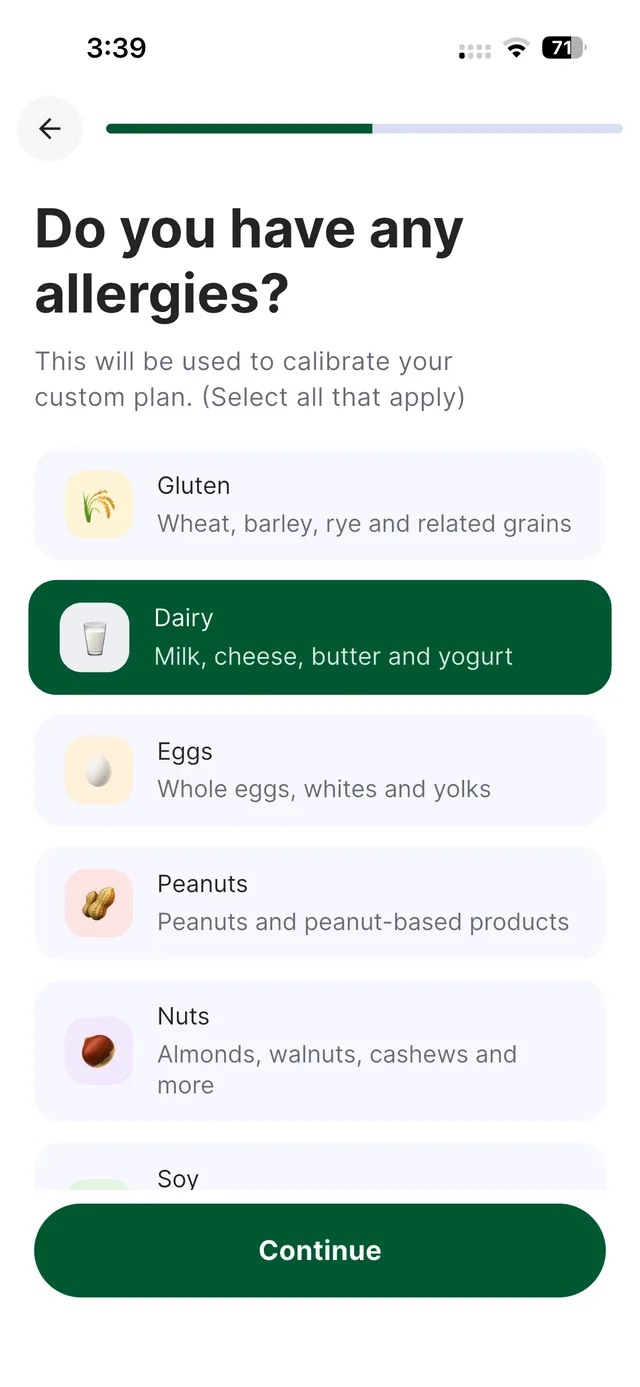
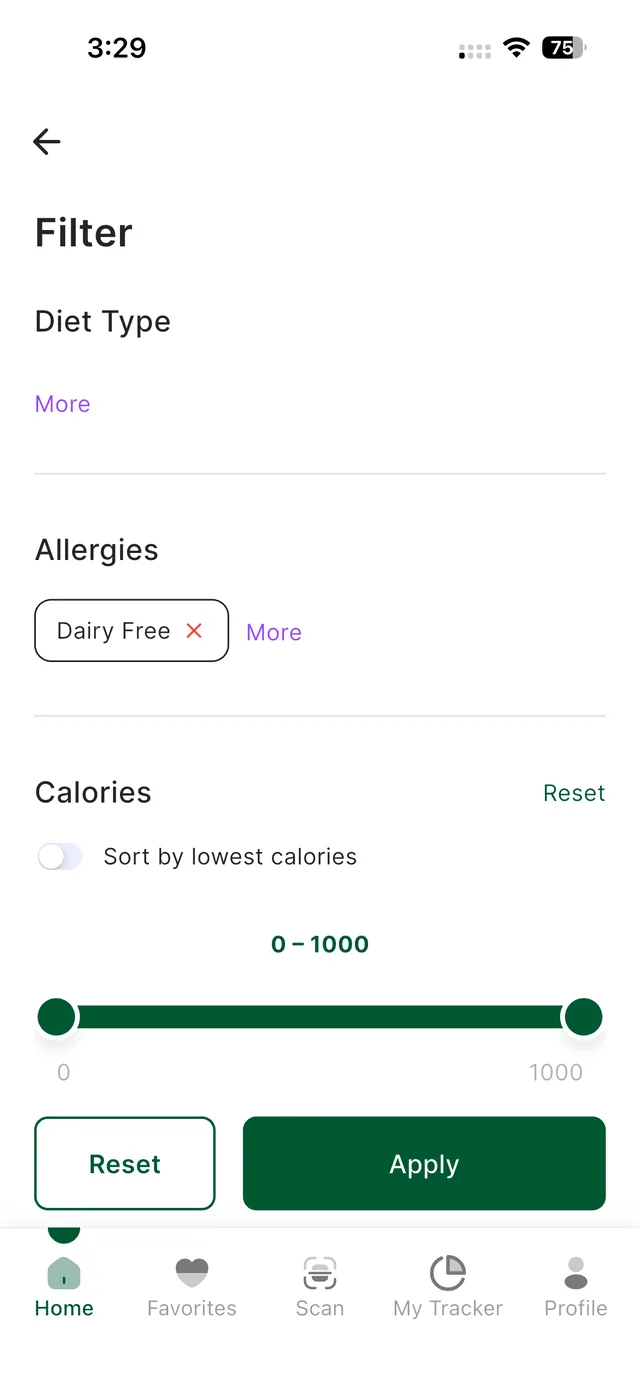
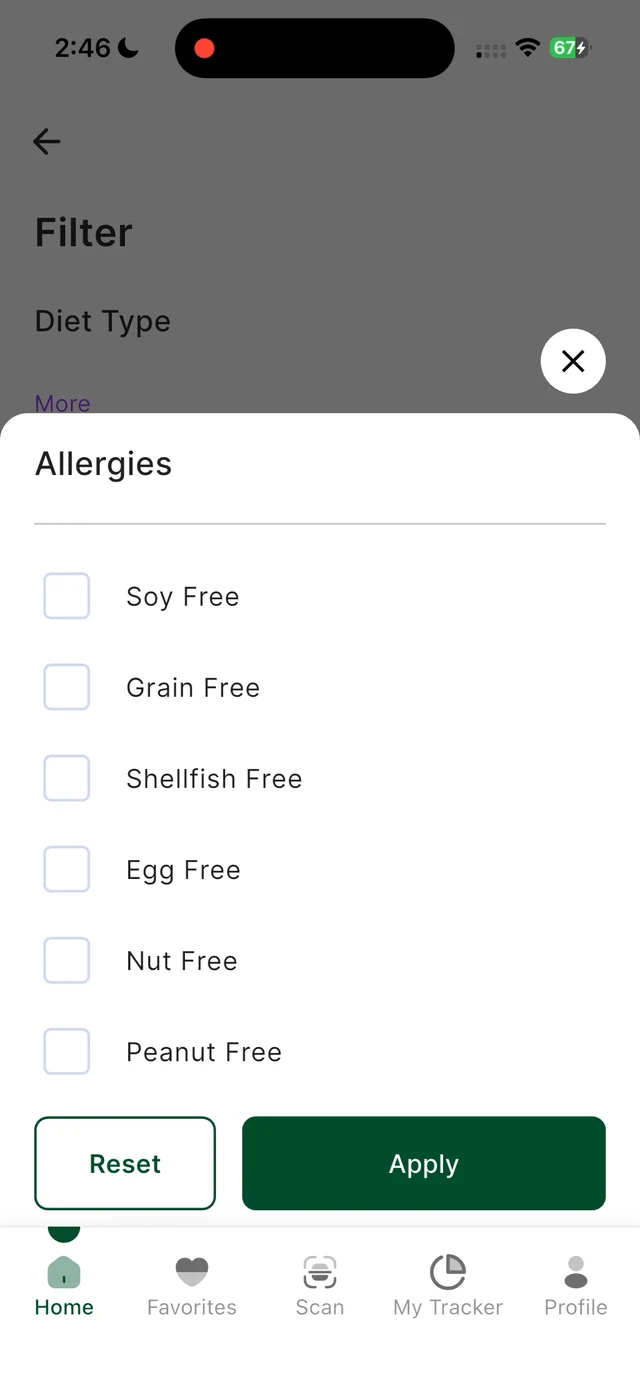
- Guiltless (our app): it asks about allergies when you set it up. When you set an allergen filter, the app stops listing products that contain that allergen, where the filter is supported. The filters are gluten, dairy, soy, grain, shellfish, egg, nut and peanut. There is no fish, sesame or wheat filter.
Before you pick one, check that it covers your allergen. The apps name different allergens on their pages, and some pages don't give a list of allergens. Then decide whether you want an app that finds products for you or one that checks a product you scan, and read its description.
Store websites with allergen filters or labels
On one search for snack bars, these options showed up. Other searches may show different ones.
- Walmart.com: the "Special Diet Needs" filter had a "Nut-Free" option.
- Amazon.com: the "Free From" filter had "Dairy Free" and "Egg Free" options, as well as "Gluten Free".
Thrive Market labels products by allergen. Its website lists products under groups such as Peanut-Free, Tree Nut-Free, Dairy-Free, Egg-Free, Soy-Free, Fish-Free, Crustacean Shellfish-Free, Sesame-Free, Wheat-Free and Big 9 Allergen-Free.
A gluten-free filter is not a wheat-allergy filter
A food labeled gluten-free can still list wheat. Under FDA rules, a gluten-free food must have less than 20 parts per million of gluten. Wheat is allowed if it was processed to meet that limit and the label says so.
That matters for any gluten filter, in an app or a store, including Guiltless's and the "Gluten Free" option in Amazon.com's "Free From" filter. A gluten filter answers a different question than "is there wheat in this?"
How to check a US food label for allergens
The US has nine major food allergens: milk, eggs, fish, crustacean shellfish, tree nuts, peanuts, wheat, soybeans and sesame, per the FDA. Sesame was added on January 1, 2023, under the FASTER Act.
An FDA-regulated packaged food that contains one of the nine must name it in one of two places:
- In the ingredient list, in parentheses after the ingredient, such as "whey (milk)" or "flour (wheat)".
- In a "Contains" statement right after or next to the ingredient list, such as "Contains wheat, milk, and soy."
A few more things to know:
- "May contain" is voluntary. The FDA says warnings such as "may contain" or "produced in a facility that also processes" are not required by law. A package without one is not a sign that the product is free of cross-contact.
- The FDA's allergen labeling rules don't cover every food. They do not apply to meat, poultry and egg products, which the US Department of Agriculture regulates. They also do not apply to highly refined oils, raw agricultural commodities, or most foods sold without a packaged label.
- Ingredients can change. The FDA suggests reading the label every time you buy, even for a product you have eaten before.
Sources
Other apps and stores: from their own pages, App Store listings and search results, read on September 29, 2026, including the snack-bar searches on Walmart.com and Amazon.com. We did not test the other apps. Guiltless: from our own app, checked on September 30, 2026.