Added Sugars vs Total Sugars: How to Read the Sugar Lines on a Label
By Guiltless ·
Total Sugars is all the sugar in a serving, including the sugar naturally in milk and fruit; Added Sugars is the part of it that was put in during processing, such as cane sugar, syrup, honey or extra juice concentrate. A plain Chobani Greek yogurt lists 5 g of Total Sugars and 0 g of Added Sugars. The strawberry version of the same cup lists 14 g of Total Sugars, and the label shows that 9 g of them were added.
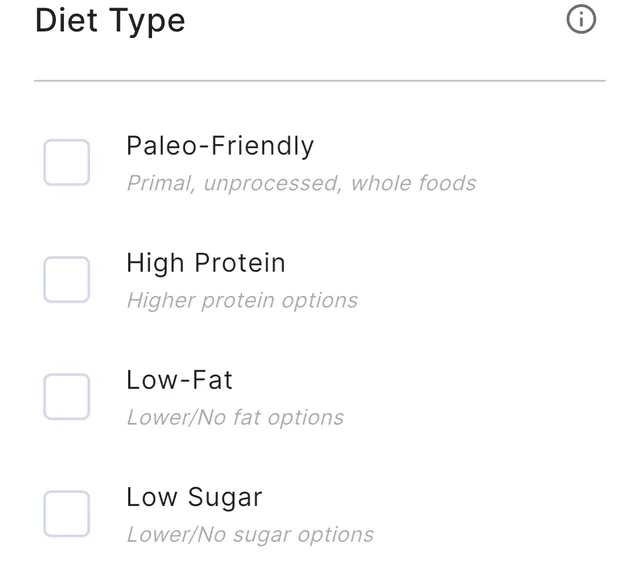
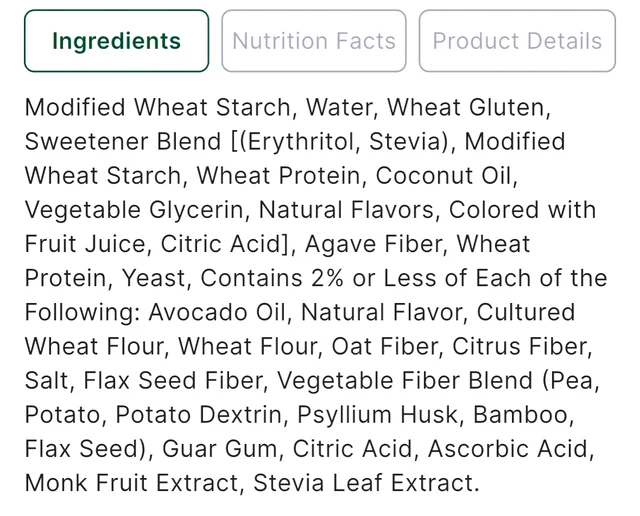
Guiltless, the grocery app we make, shows a product's Nutrition Facts and ingredient list when you scan or search for it, and has a Low Sugar diet-type filter, when supported.
What each sugar line counts
FDA rules define the two lines differently.
- Total Sugars is "the sum of all free mono- and disaccharides" in a serving, such as glucose, fructose, lactose and sucrose. It doesn't matter where they came from.
- Added Sugars are sugars "added during the processing of foods, or are packaged as such." That covers table sugar, syrups and honey, and sugars from concentrated fruit or vegetable juices beyond what the same amount of 100% juice would contain.
Some sugars don't count as added, according to FDA guidance:
- Sugars naturally present in milk, fruit and vegetables.
- Dried fruit with no sugar added to it, such as diced dried apples.
- Fruit and vegetable purees and pastes.
- 100% juice concentrate sold to you as juice, such as frozen orange juice concentrate.
- Lactose-free milk: breaking down its lactose doesn't change either line.
Two cases surprise people the other way. FDA guidance says sugars made by the controlled breakdown of starch, as in oat and rice drinks, count as added sugars, and it treats foods sweetened with concentrated fruit or vegetable juice as sugar-sweetened.
Read both lines on real labels
Each pair below is from one brand.
| Product (US) | Serving | Total Sugars | Added Sugars (%DV) | Sweeteners on the ingredient list |
|---|---|---|---|---|
| Chobani Greek Yogurt, Nonfat Plain | 5.3 oz cup | 5 g | 0 g (0%) | None: the only ingredient is cultured nonfat milk |
| Chobani Greek Yogurt, Strawberry | 5.3 oz cup | 14 g | 9 g (18%) | Cane sugar |
| Mott's No Sugar Added Applesauce | 90 g | 8 g | 0 g (0%) | None: apples and vitamin C |
| Mott's Applesauce (original) | 90 g | 14 g | 7 g (14%) | High fructose corn syrup |
| Heinz Tomato Ketchup with No Sugar Added | 1 tbsp (16 g) | 1 g | 0 g | Stevia leaf extract |
| Heinz Tomato Ketchup | 1 tbsp (17 g) | 4 g | 4 g | High fructose corn syrup and corn syrup |
| Welch's 100% Grape Juice | 10 oz bottle | 44 g | 0 g (0%) | None: grape juice |
| Welch's Grape Juice Drink | 10 oz bottle | 28 g | 20 g (40%) | High fructose corn syrup and stevia leaf extract |
One serving as labeled. The two ketchup servings differ by 1 g. Heinz prints its %DV without a percent sign.
Three things the pairs show:
- The gap between the two lines is sugar that was not added. The strawberry yogurt's 14 g of Total Sugars includes 9 g that were added. The rest is sugar that is naturally in its ingredients, such as the milk and strawberries.
- Less Total Sugars doesn't always mean less Added Sugars. The Welch's juice drink has less sugar in all than the 100% juice (28 g against 44 g), but 20 g of it was added, against none in the juice.
- Swap-style comparisons work best within one brand and one serving size. The Mott's and Chobani pairs share a serving size, so the numbers compare directly.

Why only Added Sugars has a %Daily Value
The Daily Value for added sugars is 50 g for adults and children 4 and older, so 9 g of added sugars shows as 18%. The FDA says, "There is no Daily Value* for total sugars because no recommendation has been made for the total amount to eat in a day."
For the %DV, the FDA says "5% DV or less is a LOW source of added sugars" and "20% DV or more is a HIGH source of added sugars". The Welch's juice drink, at 40%, is high; the plain yogurt, at 0%, is low.
The 50 g is a reference for the percentage, not a target. The 2025-2030 Dietary Guidelines for Americans say "no amount of added sugars or non-nutritive sweeteners is recommended or considered part of a healthy or nutritious diet," and that one meal "should contain no more than 10 grams of added sugars." Foods made for children 1 to 3 use a lower Daily Value, 25 g; our healthy snacks for kids post covers children's numbers.
Can Added Sugars be higher than Total Sugars?
It shouldn't be. Added Sugars is part of Total Sugars, and FDA guidance says, "The added sugars declaration should not exceed the total sugars declaration."
The question comes up because some added sugar can be used up before the food is finished. Yeast eats some of the sugar in bread dough, and browning uses up some sugar too. If declaring all the sugar a maker put in would make Added Sugars higher than Total Sugars, the guidance says the maker "should declare the same amount for added sugars as the amount of total sugars obtained through analytical testing."
Honey, maple syrup and cranberries: the † symbol
Honey and pure maple syrup count as added sugars, but the Farm Bill, a federal law, says these single-ingredient sugars don't have to show "Includes Xg Added Sugars". Instead, FDA guidance lets the label put a † after the added sugars %DV and explain it in a footnote.
Nate's Honey shows how it works. Its label lists 17 g of Total Sugars in a tablespoon, then "34% DV†", and the footnote reads: "†One serving adds 17g of sugar to your diet and represents 34% of the Daily Value for Added Sugars." Maple Grove Farms 100% Pure Maple Syrup lists 24 g of Total Sugars in 2 tablespoons, with "48%†".
Cranberries get a different †. They are naturally tart, so FDA guidance lets some cranberry products add a † to the added sugars %DV and explain on the package, outside the Nutrition Facts box, why sugar was added. These products still list their added sugars in grams. Ocean Spray Cranberry Juice Cocktail lists 25 g of Total Sugars and 23 g of Added Sugars in 8 fl oz (46%†), and Craisins dried cranberries list 29 g and 26 g in ¼ cup (52%†). (Ocean Spray's pages do not show the statement the † points to.)
What sugar claims on the front of the package mean
Front-of-package sugar claims follow FDA rules (21 CFR 101.60), but each one says less than it seems to:
| Claim | What the rule requires | What it doesn't tell you |
|---|---|---|
| "Sugar free", "zero sugar", "no sugar" | Less than 0.5 g of sugars per serving | It can still contain sugar alcohols or other sweeteners, such as the sucralose in Smucker's Sugar Free jam |
| "No added sugar", "no sugar added", "without added sugar" | No sugar or sugar-containing ingredient (such as jam or concentrated fruit juice) added during processing; the food it replaces normally contains added sugar | How much natural sugar is in it. Mott's No Sugar Added applesauce still lists 8 g of Total Sugars, and Welch's 100% Grape Juice lists 44 g in a 10 oz bottle |
| "Reduced sugar", "less sugar" | At least 25% less sugar than a comparison food, which the label must name | Whether the food is low in sugar; it's only lower than the comparison |
| "Unsweetened" | Not defined as a claim; the FDA treats it as a factual statement | A food labeled unsweetened, such as a juice, can still contain natural sugar |
| "Low sugar" | Not allowed on a food label: the FDA hasn't defined it |
"No added sugar" labels also have to say if the food isn't low calorie or reduced calorie, and point you to the Nutrition Facts panel for sugar and calories.
Sugar alcohols and other sweeteners
Sugar alcohols, such as erythritol and xylitol, don't count in either sugar line. FDA said in a 2020 request for information that they "are excluded from the ‘Total Sugars’ and ‘Added Sugars’ declarations"; a label can list them on a separate Sugar Alcohol line, and must when it makes a claim about sugars and the food contains sugar alcohols. FDA guidance says the agency does not intend to enforce counting allulose, a rare sugar, in either line, though it still counts in Total Carbohydrate.
Sweeteners such as stevia and sucralose show up in the ingredient list. The Heinz No Sugar Added ketchup lists stevia leaf extract, and Welch's Grape Juice Drink lists stevia alongside its high fructose corn syrup. The Dietary Guidelines advise limiting foods with non-nutritive sweeteners, so check the ingredient list as well as the sugar lines. For more on sweet-tasting products with little sugar, see why a protein bar can say "0 g sugar" and still taste sweet.
How to read the sugar lines in five steps
- Check the serving size and how many servings you'll eat.
- Read Added Sugars and its %DV: 5% or less is low; 20% or more is high.
- Compare Total Sugars with Added Sugars. The difference is sugar that wasn't added, such as the sugar naturally in milk, fruit or vegetables.
- Read the ingredient list for what was added. Look for words with "sugar" or "syrup" or that end in "-ose", plus honey and juice concentrate.
- Treat front-of-package claims as a starting point, not an answer. "No sugar added" and "sugar free" each leave something out.
Narrow down your choices with Guiltless
Guiltless can narrow down the products you need to check. It doesn't replace reading the Added Sugars line and the ingredient list yourself. In Guiltless, you can:
- filter by diet type, such as Low Sugar, when supported
- scan a barcode or search for a product to see its Nutrition Facts, ingredient list and GCR Score (Guiltless Certified Rating), a 0 to 100 rating that considers nutrition, ingredients, additives and processing together
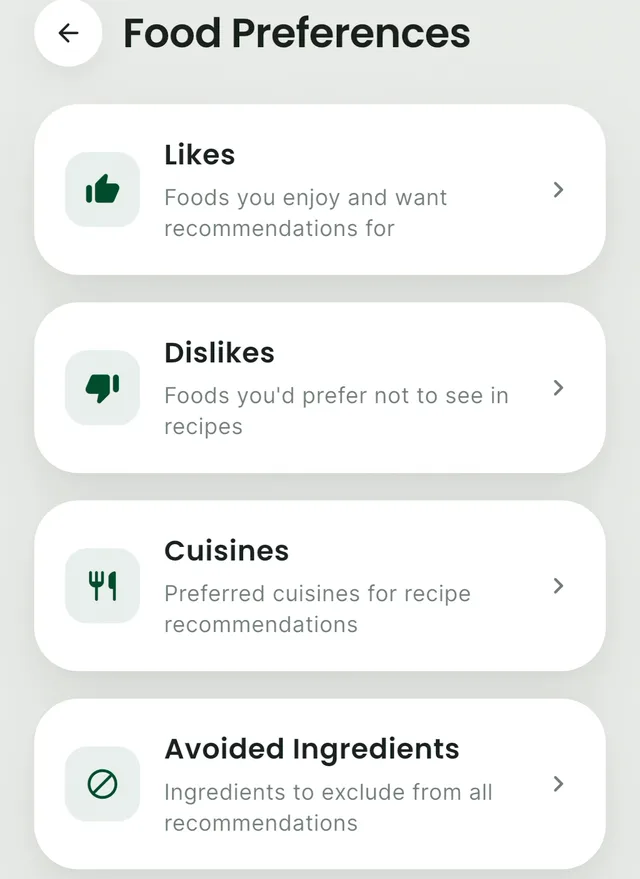
- list ingredients you want to avoid in Food Preferences, which the app uses to exclude them from its recommendations, when supported
Not every product is in the app.
FAQ
Do I count total sugars or added sugars?
Use Added Sugars to compare products and to see how much sugar was put in; it's the line with a %Daily Value. Total Sugars tells you all the sugar in a serving, including the sugar that comes with milk and fruit.
Is added sugar worse than natural sugar?
The label counts both in Total Sugars, and Added Sugars is the part that was put in. The 2025-2030 Dietary Guidelines say no amount of added sugars is recommended, while the sugars naturally in fruit and plain milk are not considered added. The Guidelines say to eat whole vegetables and fruits "in their original form" and to include full-fat dairy "with no added sugars."
How many grams of added sugar should I have a day?
The label's Daily Value for added sugars is 50 g for adults and children 4 and older, and it's used to work out the %DV. The 2025-2030 Dietary Guidelines say no amount of added sugars is recommended, and that one meal should contain no more than 10 grams.
Does "no sugar added" mean sugar-free?
No. "No sugar added" means no sugar or sugar-containing ingredient was added during processing, so the food can still have natural sugar: Mott's No Sugar Added applesauce lists 8 g of Total Sugars. "Sugar free" means less than 0.5 g of sugars per serving.
Why does honey's label look different?
Honey, maple syrup and other single-ingredient sugars don't have to show "Includes Xg Added Sugars". Their labels can show the added sugars %DV with a † and a footnote, such as Nate's Honey's "One serving adds 17g of sugar to your diet and represents 34% of the Daily Value for Added Sugars."
Do sugar alcohols count as sugar on the label?
No. Sugar alcohols such as erythritol and xylitol are left out of both Total Sugars and Added Sugars; a label can list them on their own Sugar Alcohol line.
This article is general information, not medical advice. If you have a health condition such as diabetes, or specific nutrition needs, talk to your doctor or a registered dietitian.
Sources
Product labels: US labels read on November 11, 2026, from each brand's website: Chobani, Mott's (on Keurig Dr Pepper's product facts site, linked from motts.com), Heinz, Welch's, Ocean Spray, Nate's Honey, Maple Grove Farms and Smucker's. Ocean Spray's and Nate's labels are package images on their websites; the Ocean Spray label images show the cocktail's 3 L bottle and do not show the † statement, so it isn't quoted here. Nate's page text gives a different footnote (15 g, 30%) from its label image (17 g, 34%); this post uses the label image. Other sources read on November 11, 2026.
- Products: Chobani Greek Yogurt Nonfat Plain and Strawberry, Mott's No Sugar Added Applesauce and Mott's Applesauce, Heinz Tomato Ketchup and Heinz Tomato Ketchup with No Sugar Added, Welch's 100% Grape Juice and Welch's Grape Juice Drink, Ocean Spray Cranberry Juice Cocktail and Craisins Original, Nate's Honey, Maple Grove Farms Pure Maple Syrup, Smucker's Sugar Free Seedless Strawberry Jam
- FDA, 21 CFR 101.9 (Total Sugars, Added Sugars, Daily Values) and 21 CFR 101.60 (sugar claims)
- FDA, Added Sugars on the Nutrition Facts Label and How to Understand and Use the Nutrition Facts Label
- FDA guidance: Questions and Answers Related to the Compliance Date, Added Sugars, and Declaration of Quantitative Amounts of Vitamins and Minerals (revised December 2019), The Declaration of Added Sugars on Honey, Maple Syrup, Other Single-Ingredient Sugars and Syrups, and Certain Cranberry Products (June 2019) and its fact sheet, Food Labeling Guide (Appendix A), and final guidance on allulose (2020)
- FDA, Sugars That Are Metabolized Differently Than Traditional Sugars, 85 FR 66335 (October 19, 2020)
- USDA and HHS, Dietary Guidelines for Americans, 2025-2030 (January 2026)