Non-Dairy vs Dairy-Free vs Lactose-Free: What Each Label Means
By Guiltless ·
"Non-dairy," "dairy-free" and "lactose-free" don't mean the same thing, and none of them tells you for sure whether a food has milk in it. A food labeled non-dairy can contain caseinate, a protein from milk. "Dairy-free" has no FDA definition. Lactose-free milk is still milk, with the milk sugar broken down. To find out whether a packaged food contains milk, read the ingredient list and any "Contains" statement next to it.
FDA labeling rules cover most packaged foods in the US, and they are the rules this post describes unless it says otherwise. Poultry, most meat and some egg products follow USDA rules instead.
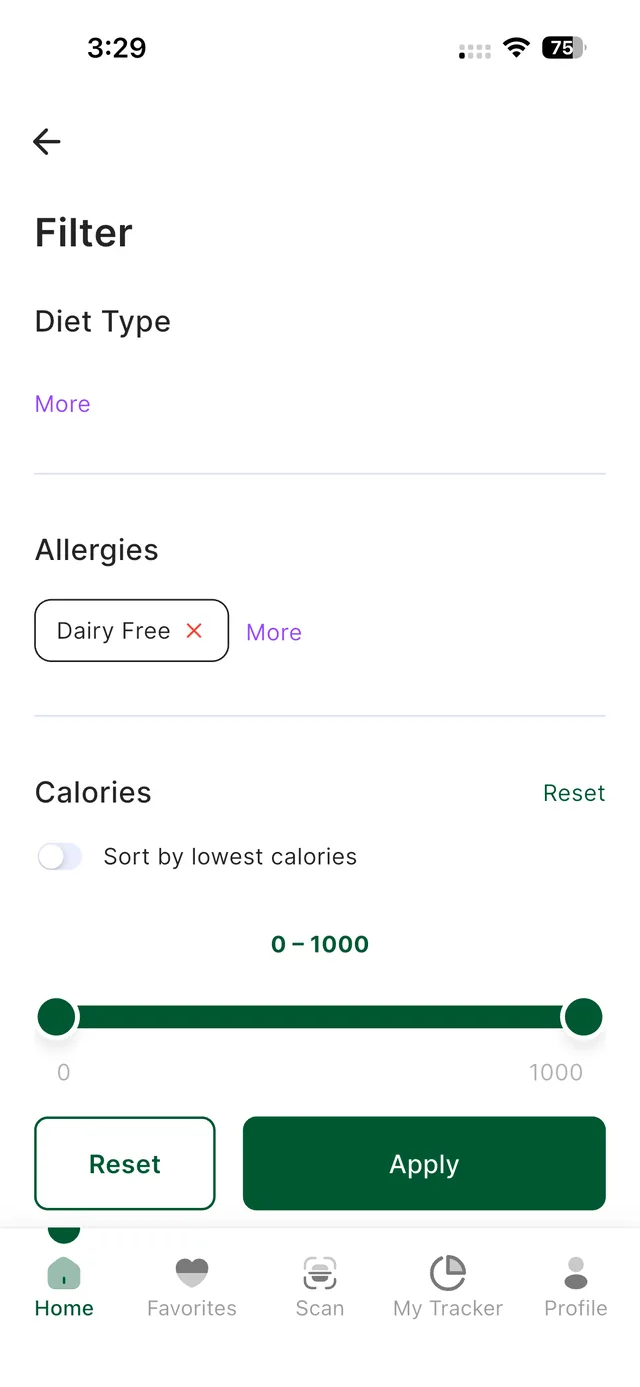
Guiltless, the grocery app we make, shows a product's ingredient list and has a Dairy Free allergy filter, when supported. Not every product is in the app.
Non-dairy vs dairy-free vs lactose-free at a glance
| Label | Does the FDA define it? | Can the food contain milk? | Seen on |
|---|---|---|---|
| Non-dairy | No. One FDA rule covers non-dairy foods that contain caseinate, a milk protein. | Yes. It can contain caseinate. | Substitutes for milk or cream, such as coffee creamers and whipped toppings |
| Dairy-free | No | The FDA expects it not to, but its testing has found milk in some dark chocolate labeled this way. | Plant-based milks and dark chocolate |
| Lactose-free | No | Yes, when it is made from milk, as lactose-free milk is. | Milk and other milk products for people with lactose intolerance |
From FDA rules and guidance listed in Sources. Check the ingredient list and any "Contains" statement on every package.
What "non-dairy" means on a label
A product labeled "non-dairy" can contain caseinate, a protein that comes from milk. The FDA's rule says that when a food labeled "nondairy" contains a caseinate, the ingredient list must follow it with a note in parentheses that names its source. The rule gives the example of a "nondairy" creamer with sodium caseinate, listed as "sodium caseinate (a milk derivative)."
Caseinate is also covered by federal allergen law, which applies to any ingredient that contains protein from milk. In one FDA example, a food made with sodium caseinate, whey and other allergens has a "Contains" statement that names milk.
In its advice for people with lactose intolerance, the National Institute of Diabetes and Digestive and Kidney Diseases (NIDDK) lists nondairy coffee creamers and nondairy whipped toppings among products that may contain lactose.
The FDA's draft guidance on plant-based milks encourages statements such as "dairy-free" or "non-dairy" on products that are not milk and don't contain milk. So "non-dairy" might be on a creamer made with a milk protein or on an oat drink made with no milk. Only the ingredient list and any "Contains" statement tell you which.
What "dairy-free" means
No FDA rule defines "dairy-free." The FDA treats a statement that a food is free of an allergen as a voluntary claim that must be truthful and not misleading. For a "milk-free" claim, the FDA says it would expect no milk allergen in the product, including milk that got in by accident during manufacturing. For dark chocolate labeled "dairy free," the FDA says it expects the chocolate not to contain milk.
Testing shows why the label alone isn't enough. In an FDA survey of dark chocolate collected in 2018 and 2019, 4 of 52 products labeled "dairy free" or with similar claims had levels of milk that could cause severe reactions in people with a milk allergy. All four were recalled. The FDA suggests contacting the manufacturer to ask how a chocolate was made, even when the label says dairy-free.
"Vegan" isn't defined by the FDA either. The FDA notes that the word is commonly used to mean a food has no animal products, such as dairy or eggs. In an earlier FDA survey, milk was found in some dark chocolate labeled vegan.
What "lactose-free" means
Lactose-free milk is milk with its lactose broken down. Lactose is the sugar naturally found in milk. The FDA's listings for lactase, an enzyme, say it converts lactose to glucose and galactose, and describe its use in milk to make lactose-reduced milk. The product is still milk.
FDA rules don't define "lactose-free." Like any label statement, it must be truthful and not misleading. The FDA has noted that "lactose-free" does not necessarily mean a product is free from milk.
Lactose-free milk products are made for lactose intolerance. A milk allergy is a reaction to milk proteins, and lactose-free milk made from milk still contains them.
Lactose intolerance vs milk allergy
Lactose intolerance is trouble digesting the sugar in milk. A milk allergy is the immune system reacting to proteins in milk. NIDDK says the two are different conditions with different causes. Lactose intolerance can cause uncomfortable symptoms such as bloating, diarrhea and gas, while a serious allergic reaction to milk can be life-threatening.
- Lactose intolerance: NIDDK says most people with lactose intolerance can have some lactose without symptoms, and the amount differs from person to person. It suggests lactose-free and lactose-reduced milk products, and says yogurt and hard cheeses such as cheddar or Swiss are lower in lactose than other milk products.
- Milk allergy: the FDA says there is no cure for food allergies and that strictly avoiding the foods that cause a reaction is an important way to prevent serious effects. Lactose-free milk products made from milk still contain milk proteins. Ask your doctor or allergist what is safe for you.
How common is trouble digesting lactose? MedlinePlus Genetics, from the National Library of Medicine, says about 65 percent of the world's people have a reduced ability to digest lactose after infancy. NIDDK says experts estimate that about 36 percent of people in the United States have lactose malabsorption. Not everyone with malabsorption has symptoms, and NIDDK says only people who have symptoms are lactose intolerant.
If you're not sure whether you have lactose intolerance or a milk allergy, ask your doctor. The FDA says a medical diagnosis is how to find out which foods cause an allergic reaction.
Where milk has to appear on a US label
Under FDA rules, when a packaged food contains milk as an ingredient, "milk" must appear on the label at least once. Federal allergen law makes milk one of nine major food allergens, and the law also covers any ingredient that contains protein from milk. The label can declare it in one of two ways:
- In the ingredient list, in parentheses after the ingredient, such as "whey (milk)." The parentheses aren't needed when the ingredient's name already says milk, as in buttermilk, or when milk is named elsewhere in the list.
- In a "Contains" statement right after or next to the ingredient list, such as "Contains milk." If a label has a "Contains" statement, it must name every major food allergen used as an ingredient.
The rule covers milk inside flavorings and colorings too. Our post on natural flavors explains how.
For allergen labeling, the FDA counts milk from cows, goats, sheep and other ruminants as milk, and milk from animals other than cows should name the animal, such as "goat milk."
Some milk ingredients don't have "milk" in their names. Food Allergy Research & Education (FARE), a US allergy group, lists names to watch for, including whey, casein and caseinates, lactose, ghee, and butter and its derivatives. The FDA says lactose (a milk sugar) and ghee (a milk fat) often still contain some milk protein, and when they do they must be declared as milk.
"May contain milk" and other advisory statements
Under FDA rules, "may contain milk" and "made in a facility that also uses milk" are voluntary. When a company uses one, the statement must be truthful and not misleading, and it can't replace good manufacturing practices. The FDA says advisory statements such as "may contain milk" suggest there may be milk present. The FDA also says a product labeled "milk-free" should not carry a "may contain milk" statement, and a product that lists milk as an ingredient shouldn't add "may contain milk."
The allergen law covers milk used as an ingredient, not milk that gets into a food by accident on shared equipment. So a label without a "may contain" statement doesn't prove a food has no milk. In an FDA survey of dark chocolate products bought in 2013 and 2014, milk turned up in some products that had no milk statement at all.
Kosher "D" and pareve
Kosher symbols are religious certification marks, not FDA labels, and a pareve mark doesn't promise a food is milk-free for someone with an allergy. The Orthodox Union (OU), one kosher certifier, says an "OU-D" means a product is dairy or was made on dairy equipment, "OU-DE" means it was made on dairy equipment, and a plain OU means it is pareve: no meat or dairy. Other certifiers use their own symbols.
The OU says a "D" can mean dairy equipment rather than a dairy ingredient, and FARE says a "D" or "dairy" next to a kosher symbol means the product contains or is contaminated with milk protein. FARE also says a pareve product is considered milk-free under kosher law but may still contain enough milk protein to cause a reaction in some people. In 2024, the FDA posted a company's recall of "non-dairy" ices that may have contained traces of milk; the company said the ices stayed kosher pareve.
Plant-based milks
Drinks such as soy, almond and oat milk are made from plants and are not milk. In draft guidance, the FDA says names like "soy milk" and "almond milk" are established by common use and should name the plant source. It also recommends, as a voluntary step, a statement that compares the drink's nutrients with milk's when they differ, for example in calcium, protein or vitamin D. The guidance is a draft, not a final rule.
A plant-based milk made without milk as an ingredient isn't guaranteed milk-free. FDA rules don't set what goes into these drinks, and the allergen law doesn't cover milk from shared equipment. Some are made from other major allergens: soy, tree nuts such as almonds or cashews, or sesame.
How to check a label for milk
- Don't stop at the front of the package. "Non-dairy," "dairy-free," "lactose-free" and "vegan" don't settle whether a food contains milk.
- Read the ingredient list and any "Contains" statement. On an FDA-regulated food, milk used as an ingredient must be named in one of those places.
- Watch for milk ingredients without "milk" in the name, such as whey, casein and caseinates, lactose, ghee and butter.
- Read any "may contain" statement, and know that a label without one isn't a guarantee. If you have a milk allergy and aren't sure, ask the manufacturer named on the label.
- Lactose-free milk products made from milk still contain milk proteins. NIDDK says lactose-free and lactose-reduced milk products may help people with lactose intolerance lower the lactose in their diet. For a milk allergy, ask your doctor or allergist what's safe for you.

Filter and scan with Guiltless
Guiltless is a food scanner app for grocery shopping, so that you can check products before they go in your cart. In Guiltless, you can:
- filter products with the Dairy Free allergy filter, when supported. It's one of eight allergy filters, along with Gluten Free, Soy Free, Grain Free, Shellfish Free, Egg Free, Nut Free and Peanut Free. A diet type filter and an allergy filter work together in search, when supported. Filter results depend on the app's product data, so read the package for the ingredient list and any "Contains" statement.
- open a product to read its full ingredient list.
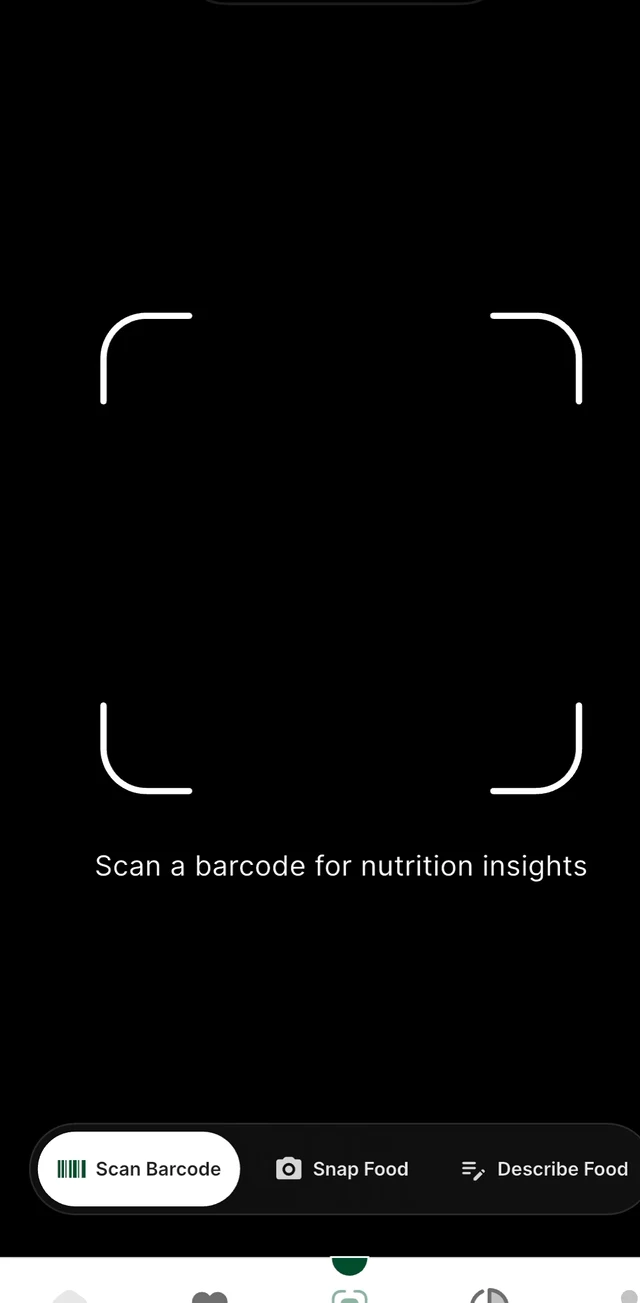
- scan a product's barcode, or search for it, to see its GCR Score (Guiltless Certified Rating), a 0 to 100 rating designed to help you compare grocery products. It considers several factors, including nutritional quality, ingredients and additives, degree of processing and organic status where applicable. Not every product is in the app.
- add products to your cart, then save or share the list through your phone's share menu. From the cart, order on-demand, where available.
For a milk allergy, check the package every time, including any "may contain" statement, and ask the manufacturer when you're unsure.
For how the other major allergens appear on a label, and why a gluten-free filter is not a wheat-allergy filter, see our post on grocery apps that filter by allergen.
FAQ
Is non-dairy the same as dairy-free?
No. A food labeled non-dairy can contain caseinate, a protein from milk, and the FDA has a rule for how those foods list it. "Dairy-free" has no FDA definition, though the FDA expects a dairy-free product not to contain milk. Read the ingredient list and any "Contains" statement to find out whether the food contains milk.
Is lactose-free milk dairy-free?
No. Lactose-free milk is milk with the lactose broken down. It still contains the milk proteins that cause a milk allergy.
Can people with a milk allergy have lactose-free milk?
Lactose-free milk made from milk still contains milk proteins, and a milk allergy is a reaction to milk proteins. If you have a milk allergy, ask your doctor or allergist which foods are safe for you.
Does non-dairy creamer have milk in it?
It can. A creamer labeled non-dairy can contain sodium caseinate, a milk protein, listed with its source, such as "(a milk derivative)." Check the ingredient list and any "Contains" statement.
Are eggs dairy?
No. Under federal allergen law, milk and egg are listed as separate major food allergens.
Is vegan the same as dairy-free?
Neither word is defined by the FDA. "Vegan" is commonly used to mean a food has no animal products, which would include milk. The FDA has found milk in some dark chocolate labeled vegan, so read the ingredient list and any "Contains" statement either way.
Does "may contain milk" mean a food has milk in it?
It means the company is saying milk could get into the food during manufacturing, and the FDA says advisory statements like this suggest there may be milk present. These statements are voluntary, so a food without one isn't guaranteed to be milk-free.
This article is general information, not medical advice. If you have a food allergy, lactose intolerance or specific nutrition needs, talk to your doctor or a registered dietitian.
Sources
Sources read on November 6, 2026. Federal regulations were read from the eCFR (Titles 7 and 21, current to November 4, 2026).
- FDA ingredient-list rule, 21 CFR 101.4, paragraph (d), for caseinate in foods labeled "nondairy."
- FD&C Act, 21 U.S.C. 321(qq), the major food allergens, and 21 U.S.C. 343(w), how they must be declared, including 343(w)(4) on flavorings and colorings, and 21 U.S.C. 343(a)(1), which requires label statements to be truthful and not misleading (U.S. Code, 2023 edition).
- FDA, Guidance for Industry: Questions and Answers Regarding Food Allergens (Edition 5), January 2025: B.7 (lactose and ghee), C.1 and C.2 (what counts as milk), D.1, D.5 and D.6 (declaring milk, including sodium caseinate), D.11 (cross-contact), D.12, D.14 and D.15 (advisory statements) and D.13 (allergen-free claims). Guidance is nonbinding.
- FDA, Food Allergies: What You Need to Know, for the "whey (milk)" and "Contains" examples, buttermilk, food allergy treatment and which foods FDA labeling rules cover; Food Allergies, for advisory statements; and Have Food Allergies? Read the Label.
- FDA, Allergic to Milk? Some Dark Chocolate Labeled as Dairy-Free May Still Contain Milk (2020), for the 2018 to 2019 survey, and Survey of Milk in Dark Chocolate Products, products bought from 2013 to 2014, for "lactose-free," "vegan" and products with no milk statement.
- FDA lactase enzyme listings, 21 CFR 184.1387 and 21 CFR 184.1388, for how lactase converts lactose to glucose and galactose in lactose-reduced milk. We found no FDA rule that defines "lactose-free" or "dairy-free"; a search of the current eCFR returned no section using "dairy-free" and no Title 21 section using "lactose-free."
- FDA, Labeling of Plant-Based Milk Alternatives and Voluntary Nutrient Statements, draft guidance, February 2023 (Docket FDA-2023-D-0451), including Q 1.8 on "dairy-free" and "non-dairy," and Plant-Based Milk and Animal Food Alternatives. We found no final version when these sources were read.
- FDA, Labeling of Plant-Based Alternatives to Animal-Derived Foods, draft guidance, January 2025, for how "vegan" is commonly used.
- NIDDK, Lactose Intolerance: Definition & Facts, Symptoms & Causes and Eating, Diet, & Nutrition (last reviewed February 2018).
- MedlinePlus Genetics, Lactose intolerance (updated March 24, 2023).
- Food Allergy Research & Education (FARE), Milk, for milk ingredient names and kosher marks.
- Orthodox Union, OU Kosher Symbols Explained, for the OU's own symbols.
- Company announcement posted by the FDA, Yummy Foods Issues Allergy Alert on Traces of Milk Allergen in Non-Dairy Ices (August 7, 2024). The FDA posts these as a public service.