What Does "High Protein" Mean on a Food Label?
By Guiltless ·
On a US food label, "high protein" means 20% or more of the protein Daily Value in an FDA standard serving. "Good source of protein" means 10% to 19%. The Daily Value for protein is 50 grams for adults and children 4 and older. The label uses it to work out the percent. So 20% is about 10 grams, and 10% is about 5 grams. But the percent on the label is adjusted for protein quality. That's why the grams alone don't always tell you which protein words a food can use.
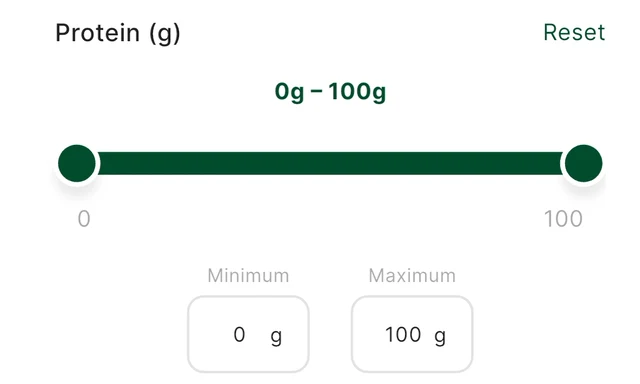
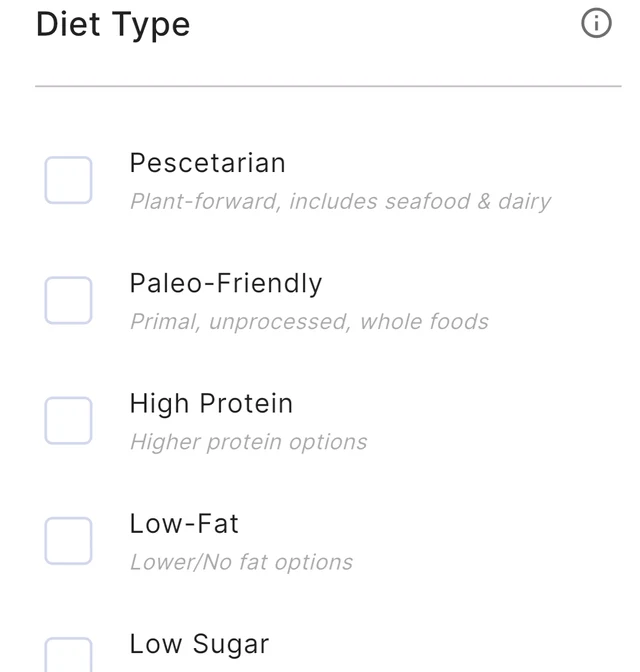
Guiltless, the grocery app we make, shows a product's Nutrition Facts when you scan a barcode. It also has a High Protein diet-type filter and a protein range filter, when supported. Not every product is in the app.
What "high protein" and "good source of protein" mean
The FDA sets the rules for protein words on a food label. A protein claim is a word or phrase about protein on the package, like "high protein". Each phrase needs a set share of the Daily Value for protein. The share is measured in a standard serving.
| Words on the package | What a standard serving must have | In grams of protein |
|---|---|---|
| "High protein", "rich in protein", "excellent source of protein" | 20% or more of the Daily Value | About 10 g or more |
| "Good source of protein", "contains protein", "provides protein" | 10% to 19% of the Daily Value | About 5 g to 9.5 g |
| "More protein", "added protein", "extra protein" | At least 10% of the Daily Value more than the food it is compared with | About 5 g more |
The grams come from the 50 g Daily Value. For "high" and "good source", the rule is a percent. The percent on the label is adjusted for protein quality. So the grams are a guide, not the test.
The "standard serving" is an amount the FDA sets for each kind of food, called the reference amount. The rule uses that amount, not the serving size the maker prints.
A label can also give an amount, like "12g protein". The FDA allows this if the amount isn't misleading. Sometimes an amount makes a food sound like a good source of protein when it isn't. Then the label needs a note next to the amount. The note says the food is not a good source.
Why the protein %Daily Value can be lower than the grams
The Daily Value for protein is 50 grams. So you might expect 12 grams of protein to show as 24%. It doesn't always.
When a label lists a %Daily Value for protein, the maker must adjust it for protein quality. The adjustment can lower the percent, but never raise it above the actual grams divided by 50.
The adjustment uses a score called PDCAAS. That is short for "protein digestibility-corrected amino acid score". It looks at how well a protein gives the body the amino acids it needs. It also looks at how well the protein is digested.
For example, the KIND Protein Crunchy Peanut Butter bar lists 12 grams of protein in one bar. Its %Daily Value for protein is 14%, not 24%. This fits the protein quality adjustment. KIND's page does not show its quality score, so we can't say how much the adjustment was. The page calls the bars "a good source of protein", which fits 14%.
Silk Protein Original shows no drop. It lists 13 grams of protein in 1 cup and 26% of the Daily Value. That is 13 divided by 50. Its protein comes from soy.
When the label has to show a %Daily Value for protein
A label has to list protein in grams. The %Daily Value for protein is only needed in some cases. The FDA says a package with a protein claim, like "high in protein", must list it. Foods for babies and children under 4 must list it too.
When you see a protein claim on the front, turn the package over. The Protein line should show grams and a percent.
Three real nutrition tables from brand websites
| Product (US) | Serving | Protein | Protein %Daily Value | What the brand's page says |
|---|---|---|---|---|
| Chobani Greek Yogurt, Nonfat Plain | 5.3 oz cup | 14 g | 28% | "Excellent source of protein" |
| fairlife 2% Reduced Fat Ultra-Filtered Milk | 1 cup (240 ml) | 13 g | 26% | Compares its 13 g with 8 g in regular milk |
| Silk Protein, Original | 1 cup (240 ml) | 13 g | 26% | Compares its 13 g with 8 g in reduced fat milk |
Values from each brand's US website.
What the three tables show:
- A protein comparison should name the other food. fairlife's page compares its 13 grams with 8 grams in regular milk. Silk's page compares its 13 grams with 8 grams in a cup of reduced fat milk.
- Check the serving size before you compare. All three list protein for one serving. But 1 cup of fairlife or Silk and a 5.3 oz cup of yogurt are not the same amount.
- "High" and "good source" are set as a percent of the Daily Value, not as grams. Each of the three shows 20% or more for one serving. The FDA's label guide calls that high.
How to check a protein claim in four steps
- Find the serving size. The numbers on the Nutrition Facts label are for one serving. If you eat two servings, you get twice as much.
- Read the Protein line. Look at the grams and the %Daily Value. The FDA's label guide calls 20% or more high for a serving, and 10% to 19% a good source. The rule for a package claim uses the reference amount, which can be different from the printed serving.
- Compare protein with calories. Two foods can have the same protein and different calories. Our best protein bars post ranks bars by protein per 100 calories.
- Read the rest of the label too. A protein claim is only about protein. Check the Added Sugars line and the ingredient list.
Is 50 grams of protein what I should eat each day?
The 50-gram Daily Value is a number used on labels. It is based on getting 10% of the calories in a 2,000-calorie diet from protein. The label works out the percent from it. The Daily Value is not set for any one person.
The 2025-2030 Dietary Guidelines for Americans list a protein serving goal. It is 1.2 to 1.6 grams of protein per kilogram of body weight a day. They say to adjust it as needed for your own calorie needs. The label's Daily Value is still 50 grams, and it is a separate number. The goal is for people in general. A doctor or registered dietitian can help with your own needs.
Narrow down your choices with Guiltless
Guiltless is a food scanner app for grocery shopping. It can narrow down the products you need to check, but it doesn't replace reading the label yourself. In Guiltless, you can:
- set a protein range in grams, and a calorie range, when supported
- filter by diet type, such as High Protein, when supported
- scan barcodes, or search for a product, to see its Nutrition Facts and ingredient list
- see a product's GCR Score (Guiltless Certified Rating), a 0 to 100 rating that considers nutrition, ingredients, additives and processing together
The protein range is in grams, and the High Protein filter does not replace the label. Check the %Daily Value on the label too. Not every product is in the app, and not every product shown has a GCR Score.
FAQ
What does "good source of protein" mean?
"Good source of protein" means a standard serving has 10% to 19% of the Daily Value for protein. The percent is adjusted for protein quality. That is about 5 to 9.5 grams.
How many grams of protein is "high protein"?
"High protein" means about 10 grams of protein or more in a standard serving. The rule is 20% or more of the 50-gram Daily Value. The percent is adjusted for protein quality.
Why does my protein bar have 12 grams of protein but only 14% Daily Value?
The protein %Daily Value is adjusted for protein quality. That can make it lower than the grams suggest. The KIND Protein Crunchy Peanut Butter bar lists 12 grams and 14%. That is in the "good source" range, not "high".
Does "high protein" mean a food is good for you?
No. A "high protein" claim is only about protein. Read the calories, Added Sugars, sodium and the ingredient list too.
This article is general information, not medical advice. If you have a health condition or specific nutrition needs, talk to your doctor or a registered dietitian.
Sources
Product labels: Nutrition tables read from each brand's US website: Chobani and fairlife on November 18, 2026, and Silk and KIND on November 19, 2026. Other sources read on November 18, 2026.
- Products: Chobani Greek Yogurt Nonfat Plain, fairlife 2% Reduced Fat Ultra-Filtered Milk, Silk Protein Original, KIND Protein Crunchy Peanut Butter
- FDA, 21 CFR 101.54 ("high", "good source" and "more" claims) and 21 CFR 101.9 (protein %Daily Value, protein quality, Daily Values)
- FDA, 21 CFR 101.13 (reference amounts, amount statements and comparison claims) and 21 CFR 101.12 (reference amounts)
- FDA, How to Understand and Use the Nutrition Facts Label
- USDA and HHS, Dietary Guidelines for Americans, 2025-2030 (January 2026)