Is Celsius Bad for You? What's Really in the Energy Drink
By Guiltless · · Updated
For most healthy adults, one can of Celsius a day stays under the 400 mg of caffeine a day that the FDA cites, but it is a lot of caffeine in one go. A 12 fl oz can of the Celsius energy drink has 200 mg of caffeine, half of that 400 mg a day. What matters is how much caffeine you have in total, when you drink it, and whether you are in a group the can itself says should skip it.
If you like comparing drinks in the aisle, Guiltless, the grocery app we make, shows a product's ingredients and score when you scan it.
How much caffeine is in Celsius?
Celsius has 200 mg of caffeine in a 12 fl oz can, 270 mg in a 16 fl oz Celsius Essentials can, and none in Celsius Hydration, according to their US labels.
| Celsius product (US) | Serving | Caffeine | Sweetener on the label |
|---|---|---|---|
| Celsius | 12 fl oz can | 200 mg | Sucralose |
| Celsius Essentials | 16 fl oz can | 270 mg | Sucralose, acesulfame potassium |
| Celsius On-The-Go | 1 powder stick | 200 mg | Sucralose |
| Celsius Hydration | 1 powder stick | None | Sucralose |
Figures are from one flavor's US label per line. Other flavors may differ slightly, so check the can you buy.
For comparison, here is the caffeine in some other drinks.
- Brewed coffee: about 95 mg in an 8 fl oz cup, based on USDA data. Coffee varies a lot: the FDA gives 113 to 247 mg for a 12 fl oz cup.
- Red Bull: 80 mg in an 8.4 fl oz can, per Red Bull.
- Energy drinks in general: the FDA gives 41 to 246 mg per 12 fl oz.
So one Celsius has about as much caffeine as two small cups of brewed coffee, and more than two cans of Red Bull.

What else is in a can of Celsius?
Besides caffeine, a 12 fl oz Celsius has sucralose, several plant extracts, taurine and a set of added vitamins, with 10 calories and no sugar. The US can carries a Nutrition Facts panel. Here are the ingredients on the Sparkling Orange label, grouped by what they do:
- Caffeine and plant extracts: caffeine, guarana seed extract and green tea extract. The label gives 200 mg of caffeine for the can, but no amount for either extract.
- Sweetener: sucralose. No sugar, stevia or erythritol is listed.
- Other added ingredients: taurine, glucuronolactone and ginger root extract, also with no amounts. Celsius calls part of this mix, with the caffeine sources, its "MetaPlus" blend.
- Vitamins and minerals: vitamin C, several B vitamins, chromium and calcium. Some are far above the Daily Value: biotin is 1000% and vitamin B12 is 250%.
- Base, acid, flavor and color: carbonated filtered water, citric acid, natural flavor and beta-carotene for color.

What about the green tea extract?
The green tea extract in Celsius is listed without an amount, so you can't compare it with safety research. The European Food Safety Authority found that 800 mg or more a day of EGCG, a catechin found in green tea, taken as a food supplement was linked to raised liver enzymes. It considers green tea brewed the traditional way to be generally safe. If you already take a green tea extract supplement, ask a pharmacist or doctor how a daily energy drink fits with it.
What about the "no preservatives" lawsuit?
The Celsius settlement was about a label claim, not about safety. Celsius agreed to a $7.8 million nationwide class settlement in 2022 over cans that said "no preservatives" while containing citric acid. Celsius said it uses citric acid for flavor. The settlement, approved in March 2023, required it to drop the "No Preservatives" claim. No court ruled for either side.
Does Celsius help you burn fat?
Celsius markets its drink as "clinically proven to accelerate metabolism and burn body fat when exercising," but the published studies behind that are small, short and partly company-funded. The can itself says Celsius alone does not produce weight loss without a healthy diet and moderate exercise.
What four of the studies it cites found:
- Mendel and Hofheins, 2007: 20 people, one can compared with a Diet Coke, measured over 3 hours. Resting metabolic rate rose for those hours. The authors wrote that the long-term effects on body composition were unknown.
- Dalbo and colleagues, 2008: 60 people, a single serving, 3 hours of measurements.
- Roberts and colleagues, 2008: 60 people over 28 days. Body fat fell more than with a placebo, but resting energy use at day 28 was not significantly different.
- Lockwood and colleagues, 2010: 38 previously inactive men over 10 weeks. Men who drank it before exercising lost more fat mass than men who exercised with a placebo. Without exercise, the drink made no significant difference to body composition, fitness or strength.
The short studies measured a rise in energy use over a few hours, and the longer ones ran 4 to 10 weeks. None shows what happens over a longer period, and the 10-week study found no effect without exercise. If weight is your goal, a registered dietitian can help you plan.
How many cans of Celsius a day is too much?
For a healthy adult, the limit is your total caffeine, not the number of cans. The FDA cites 400 mg a day as an amount not generally associated with negative effects for most adults. The newest US Celsius label says to have no more than 1 can every 4 hours and 2 a day. The Essentials label says 1 a day.
Two cans of Celsius is 400 mg on its own, so any coffee on top takes you past 400 mg.

To count your own day:
- List every source: coffee, tea, soda, energy drinks, pre-workout powders and caffeine pills.
- Use the label number where there is one. For brewed coffee and tea, use a range, not a single number.
- Watch for symptoms, not just the total. The FDA lists a fast heart rate, palpitations, raised blood pressure, trouble sleeping, anxiety, jitters, an upset stomach, nausea and headaches as signs of too much. People differ a lot in how sensitive they are.
When to drink it: the sleep question
If you drink a Celsius in the afternoon, it can still affect your sleep that night. In a small 2013 study in the Journal of Clinical Sleep Medicine, 12 healthy sleepers took 400 mg of caffeine 0, 3 or 6 hours before bed. Even at 6 hours, it cut their sleep by more than an hour on a sleep monitor, while their own sleep diaries showed a smaller change. The authors suggested avoiding substantial caffeine for at least 6 hours before bedtime.
That study used twice the caffeine of one 12 fl oz can, so treat it as a guide, not a rule. If you go to bed at 11 pm, 6 hours before is 5 pm.
Who should skip Celsius?
US Celsius cans say the drink is not recommended for children under 18, people who are pregnant or nursing, or people who are sensitive to caffeine. US guidance differs by group.
| Group | US guidance |
|---|---|
| Most adults | 400 mg a day (FDA) |
| Pregnant | Under 200 mg a day (ACOG) |
| Children and teens | The American Academy of Pediatrics says energy drinks have no place in the diet of children and adolescents |
What that means for one can:
- In pregnancy, one 12 fl oz Celsius is 200 mg, which already reaches the American College of Obstetricians and Gynecologists' guidance to stay under 200 mg a day, before any coffee or tea. Talk to your prenatal care provider about caffeine.
- If you have a heart condition, high blood pressure or anxiety, or you take medication, ask your doctor or pharmacist before drinking energy drinks. The FDA lists a faster heart rate and raised blood pressure among the effects of too much caffeine.
- Don't mix Celsius with alcohol. The CDC says caffeine doesn't reduce alcohol's effects, and mixing them can lead to drinking more.

Is the sucralose in Celsius bad for you?
Sucralose is approved by the FDA, which first allowed it in 1998, but the World Health Organization advises against relying on sweeteners like it for weight control. The two positions answer different questions:
- Safety: the FDA reviewed more than 110 studies and set an acceptable daily intake of 5 mg per kg of body weight.
- Weight: in 2023 the WHO recommended against using non-sugar sweeteners, sucralose among them, to control body weight or lower the risk of diseases such as type 2 diabetes. It rated that recommendation "conditional", because the link it found between sweeteners and disease might be explained by other differences between the people studied. It doesn't apply to people who already have diabetes.
You may also have seen headlines about erythritol and heart risk. A 2023 study in Nature Medicine linked higher blood erythritol with heart attack, stroke or death over 3 years in people already being checked for heart disease. The authors said it shows an association, not cause, and the FDA said the study did not establish a causal link. The US Celsius labels behind the table above (one flavor of each line) don't list erythritol.
Compare drinks before you buy
Comparing drinks in a cooler means holding several labels in your head at once. In Guiltless, you scan a barcode or search for a product to see:
- its GCR Score (Guiltless Certified Rating), from 0 to 100, which considers nutrition, ingredients, additives and processing together
- its ingredient list and Nutrition Facts, in one place
- other products to compare, each with its own score, so you can find a swap. Swaps don't always score higher, so compare the numbers.
You can scan barcodes, though not every product is in the app. The screenshots below show two sparkling waters in Guiltless.
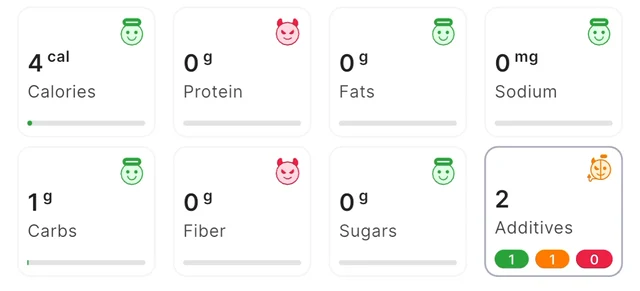
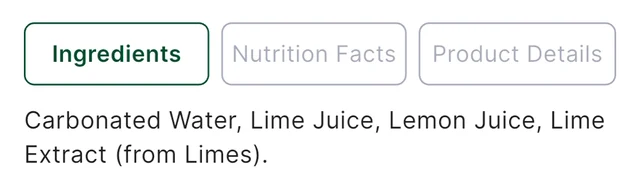
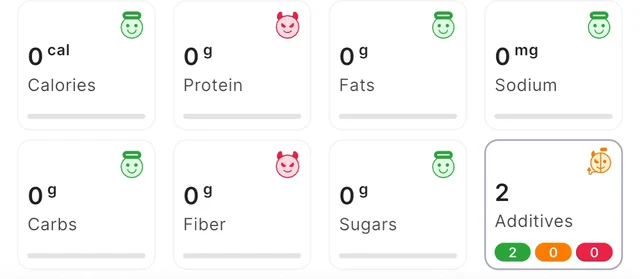
The GCR Score sums up many factors in one number, so keep counting caffeine milligrams from the label as well.
Options with less caffeine than a Celsius, with caffeine per serving:
- Celsius Hydration: none, per its US label. It is sweetened with sucralose.
- Brewed coffee: about 95 mg per 8 fl oz cup, and you choose the size.
- Plain or flavored sparkling water: usually none, but check the label.
FAQ
Is it OK to drink Celsius every day?
For most healthy adults, one 12 fl oz Celsius a day (200 mg of caffeine) fits within the 400 mg a day the FDA cites, as long as your total for the day, including the can, stays at or under 400 mg. The US label sets a maximum of two cans a day, or one a day for Celsius Essentials.
Is Celsius worse than coffee?
Celsius isn't worse than coffee by default, but it usually has more caffeine per serving: 200 mg per 12 fl oz can, against about 95 mg in an 8 fl oz cup of brewed coffee. Celsius adds sucralose, plant extracts and vitamins; black coffee has none of those.
Is Celsius worse than Red Bull?
Per can, a 12 fl oz Celsius has 200 mg of caffeine and an 8.4 fl oz Red Bull has 80 mg, per each brand. That is about 17 mg per fl oz for Celsius and about 10 mg for Red Bull. Compare labels for sugar and sweeteners too.
Is Celsius bad for your heart?
The FDA lists a faster heart rate, palpitations and raised blood pressure among the effects of too much caffeine. If you have a heart condition or high blood pressure, ask your doctor before drinking energy drinks, including Celsius.
Can teenagers drink Celsius?
US Celsius cans say the drink isn't recommended for anyone under 18, and the American Academy of Pediatrics says energy drinks have no place in the diet of children and adolescents.
Can you drink Celsius while pregnant?
US Celsius cans say the drink isn't recommended during pregnancy or nursing. One can has 200 mg of caffeine, which already reaches the American College of Obstetricians and Gynecologists' guidance to stay under 200 mg a day.
This article is general information, not medical advice. If you have a health condition, are pregnant or take medication, talk to a doctor, pharmacist or registered dietitian about caffeine.
Sources
Celsius labels and claims: from celsius.com, read on October 3, 2026. Other sources read on October 3, 2026.
- Celsius, products, the science and FAQ; label images for Celsius Sparkling Orange, Essentials, On-The-Go and Hydration
- Celsius Holdings, Form 8-K, October 12, 2022 and Form 10-Q, first quarter 2023
- MediaPost, report on the Celsius settlement (December 29, 2022)
- FDA, Spilling the Beans: How Much Caffeine Is Too Much? and Aspartame and Other Sweeteners in Food
- USDA, FoodData Central: brewed coffee
- ACOG, Committee Opinion No. 462: Moderate caffeine consumption during pregnancy (2010)
- American Academy of Pediatrics, Sports Drinks and Energy Drinks for Children and Adolescents (2011) and The Effects of Caffeine on Kids
- CDC, Effects of Mixing Alcohol and Caffeine
- WHO, guideline on non-sugar sweeteners (2023)
- EFSA, safety of green tea catechins (2018)
- Drake and colleagues, Caffeine effects on sleep taken 0, 3, or 6 hours before going to bed, Journal of Clinical Sleep Medicine (2013)
- Witkowski and colleagues, The artificial sweetener erythritol and cardiovascular event risk, Nature Medicine (2023)
- Studies Celsius cites: Mendel and Hofheins 2007, Dalbo and colleagues 2008 (funded by Celsius), Roberts and colleagues 2008 (funded by Celsius), Lockwood and colleagues 2010
- Red Bull, ingredients