What Does Organic Mean on a Food Label?
By Guiltless ·
On a US food label, "organic" means the food was produced and handled under the USDA organic regulations, which ban genetic engineering, irradiation and sewage sludge, and allow only the synthetic substances on an approved list. How much of a packaged food is organic, not counting water and salt, depends on the exact words: "100 percent organic" means all of it, "organic" means at least 95% and "made with organic" means at least 70%. The word describes how a food was produced. It is not a claim about nutrition or food safety.
(In chemistry, "organic" means something else: compounds that contain carbon. This article is about the word on food labels.)
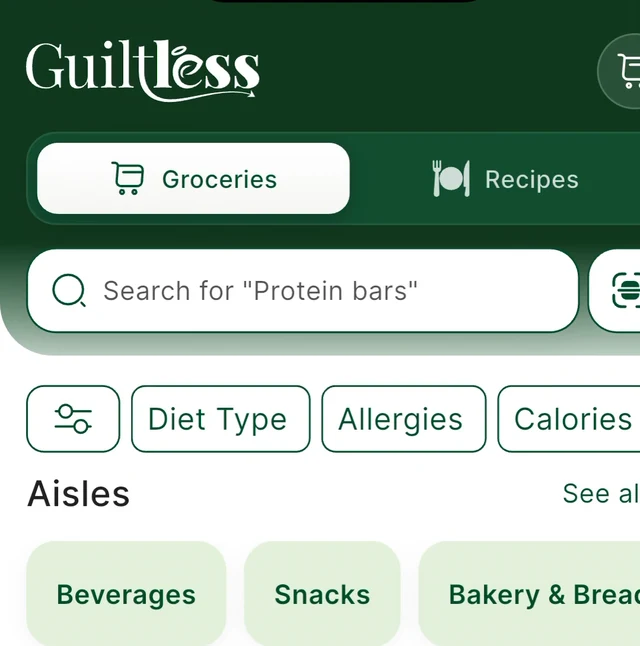
Guiltless, the grocery app we make, lets you scan barcodes or search for products to check their ingredients and Nutrition Facts. Not every product is in the app.
The four organic labels
The USDA organic regulations set four categories for packaged food. The percentages are calculated by weight, or by fluid volume for liquids. Added water and salt are left out, and the result is rounded down to the nearest whole number.
| On the label | Organic ingredients | USDA Organic seal allowed? | Other rules |
|---|---|---|---|
| "100 percent organic" | 100% | Yes | Most raw or minimally processed crops, such as fresh produce, can use this label. |
| "Organic" | At least 95% | Yes | The other 5% or less must be organic too, unless an ingredient is not commercially available in organic form or is a substance on the USDA's approved list. |
| "Made with organic (ingredients or food groups)" | At least 70% | No | The front may name up to three organic ingredients or food groups, such as "made with organic oats and blueberries." It cannot say "made with organic ingredients." |
| Organic ingredients listed only in the ingredient list | Less than 70% | No | Only the ingredient list may say which ingredients are organic, with the word "organic" or an asterisk. The front of the package cannot use the word. |
From the USDA organic regulations, 7 CFR 205.301 to 205.305 and 205.311, and the USDA Agricultural Marketing Service's labeling page.
Products in the first two categories may carry the seal, but they do not have to.
Packages in the first three categories must name their certifier. Below the name of the company that made or distributed the product, the label says "Certified organic by" (or similar words), followed by the name of the certifying agent. Before a label can be used in stores, a USDA-accredited certifying agent must review and approve it.
What the organic rules ban, and what they allow
To be labeled "100 percent organic," "organic" or "made with organic," a food must be produced and handled without:
- genetic engineering, which the regulations call "excluded methods" (traditional breeding, hybridization and fermentation are not excluded)
- ionizing radiation (food irradiation)
- sewage sludge
- synthetic substances, unless they are on the USDA's National List of allowed substances
- added sulfites, nitrates or nitrites, in products labeled "100 percent organic" or "organic" (wine with added sulfites can be labeled "made with organic grapes")
In a "made with organic" product, the nonorganic ingredients (up to 30%) still cannot be produced with genetic engineering, ionizing radiation or sewage sludge.
Organic does not mean no pesticides. The National List allows some synthetic substances in organic crop production, including some insecticides, which may be used only when other pest-control methods are not enough. The National Pesticide Information Center, which operates under a cooperative agreement between Oregon State University and the EPA, says pesticides used in organic farming include natural substances such as plant oils and sulfur dust, so organic food can have some pesticide residue.
The rules also limit residues of pesticides that organic farming does not allow. If testing finds a prohibited pesticide above 5% of the EPA's tolerance (its legal limit) for that residue, the food cannot be sold or labeled as organic.
Organic meat, dairy and eggs
For organic animal products, the regulations also set rules for how the animals are raised:
- The animals must be fed organic feed, including pasture and forage.
- Hormones cannot be given to promote growth, and antibiotics cannot be added to feed.
- An animal treated with antibiotics cannot be sold as organic, and neither can its milk, eggs or meat. A sick animal must still be treated: the rules say a farmer must not withhold medical treatment to keep an animal's organic status.
- Cattle, sheep, goats and other ruminants must graze on pasture throughout the grazing season, at least 120 days a year, and get at least 30% of their dry matter intake from grazing during that season, on average. The rules allow some exceptions, such as for cattle in their final feeding period before slaughter.
- All organic animals must have year-round access to the outdoors, with some temporary exceptions, and keeping an animal indoors all the time is not allowed.
- Poultry must be under organic management from no later than their second day of life.
The USDA organic rules have no standards for seafood. Their definition of livestock leaves out aquatic animals, and the USDA has not published an organic rule for farmed fish.
What organic does not tell you
The USDA Organic seal tells you how a food was produced, not how nutritious or safe it is. In the final rule that set up the organic program in 2000, the USDA wrote that the seal indicates only that a product was certified to a production or handling process or system, and "does not convey a message of food safety or more nutritional value."
A 2012 Stanford University review of 17 studies in people and 223 studies of nutrients and contaminants in food concluded that the published research "lacks strong evidence that organic foods are significantly more nutritious than conventional foods." The same review found that organic produce had a lower risk of detectable pesticide residues, by about 30 percentage points, but that the differences in the risk of exceeding the maximum allowed limits were small.
On a packaged food, the organic label also says nothing about added sugars, sodium or saturated fat. On an organic cookie, cereal or snack, read the Nutrition Facts label as you would on any other food. Our healthy grocery list explains the Added Sugars line and the %Daily Value, and our comparison of healthy snacks for kids shows how much added sugar store-bought snacks can contain.

Organic, natural, non-GMO and bioengineered
- Natural: the FDA has not formally defined "natural." Its long-standing policy is that nothing artificial or synthetic, including any color additive, that would not normally be expected in the food has been added to it. The FDA says that policy does not cover how the food was produced, such as the use of pesticides, and that the policy does not consider whether "natural" should describe a nutrition or health benefit. For meat and poultry, the USDA's Food Safety and Inspection Service has a long-standing policy that a "natural" product has no artificial flavoring, coloring, chemical preservatives or other artificial or synthetic ingredients, and is not more than minimally processed. Neither one is a certification of how the food was grown or raised, as organic is.
- Non-GMO: organic rules ban genetic engineering, so certified organic food is produced without it. "Non-GMO Project Verified" is a separate label from the Non-GMO Project, a private nonprofit, not a government program.
- Bioengineered: the USDA requires a disclosure on foods that are or may be bioengineered. It defines bioengineered foods as foods that contain detectable genetic material modified through certain lab techniques, where the modification could not be achieved through conventional breeding or found in nature. Food certified under the National Organic Program does not need this disclosure.
How to check that an organic label is real
The USDA organic label is the only government-backed organic claim for food sold in the United States, according to the USDA's Agricultural Marketing Service. Its oversight has several layers:
- Inspections: certified organic farms and businesses are inspected every year, and they are also subject to unannounced inspections and testing. Each certifier must make unannounced inspections of at least 5% of the operations it certifies every year, and test samples from at least 5% of them.
- Penalties: anyone who knowingly sells or labels a product as organic outside the rules can face a civil penalty of up to $22,974 per violation.
- Imports: since March 19, 2024, under the USDA's Strengthening Organic Enforcement rule, each shipment of organic products imported into the United States needs valid National Organic Program (NOP) Import Certificate data. The rule also added traceability and recordkeeping requirements, which the USDA says increase its ability to trace organic products from the store back to the farm.
To check a product yourself, find the "Certified organic by" line on the package. You can look up a certified farm or business in the USDA's Organic Integrity Database, which shows whether an operation is certified or its certification has been surrendered, suspended or revoked.
Organic at a farmers market
A farm that sells $5,000 or less of organic products a year does not need to be certified. It must still follow the organic production and labeling rules, and it may call its products organic. It cannot use the USDA Organic seal or a certifier's seal, or say its products are certified organic. If you are not sure, ask the farmer whether the farm is certified or exempt.
Filter and scan with Guiltless
Guiltless is a food scanner app for grocery shopping, so you can check products before they go in your cart. In Guiltless, you can:
- filter products by diet type, such as Organic, Non-GMO or Low Sugar, when supported. A diet type filter and an allergy filter work together in search, when supported. Filter results depend on the app's product data, so check the package for the organic wording and the "Certified organic by" line, and read the label for allergens.
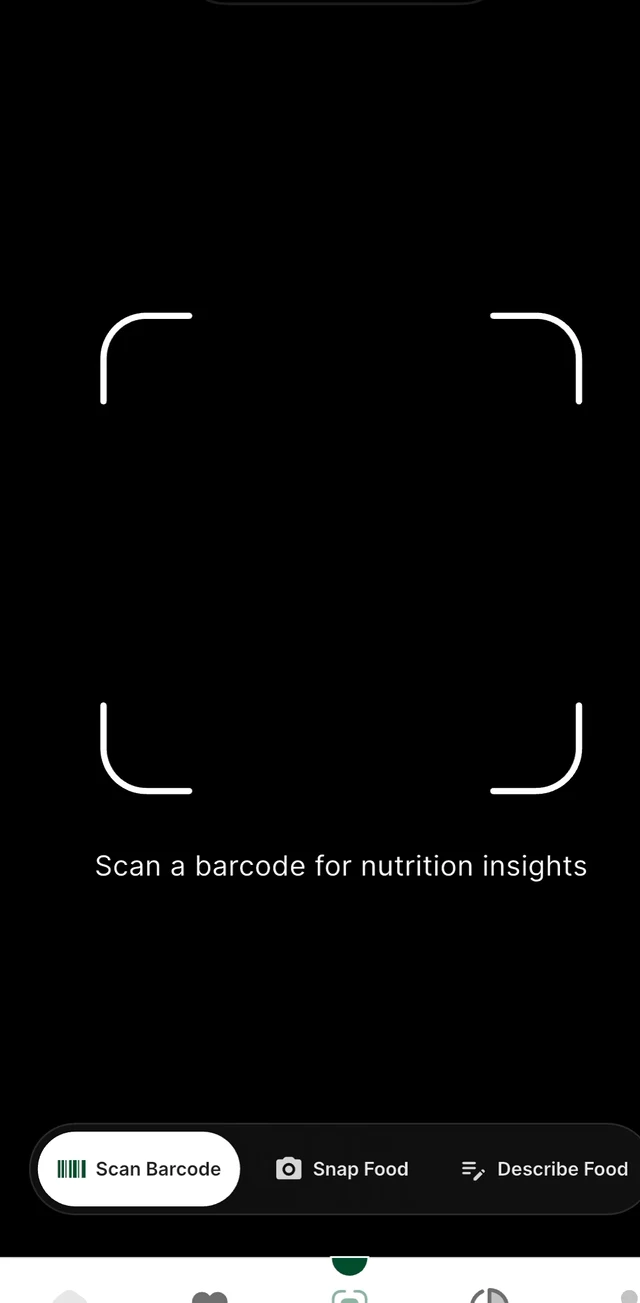
- scan a product's barcode, or search for it, to see its ingredients, Nutrition Facts and its GCR Score (Guiltless Certified Rating), a 0 to 100 rating designed to help you compare grocery products. It considers several factors, including nutritional quality, ingredients and additives, degree of processing and organic status where applicable. Not every product is in the app.
- add products to your cart, then save or share the list through your phone's share menu. From the cart, order on-demand, where available.
As you build your list, check ingredients and Nutrition Facts, and the organic wording on the package.
FAQ
What does organic mean?
On a US food label, organic means the food was produced and handled under the USDA organic regulations. Those rules ban genetic engineering, irradiation and sewage sludge, allow only the synthetic substances on an approved list, and set rules for how organic animals are fed and raised. Certified organic farms and businesses are inspected every year.
What does USDA organic mean?
The USDA Organic seal means a product is "100 percent organic" or "organic" (at least 95% organic ingredients, not counting water and salt), and that its producer and handler were certified by a USDA-accredited certifying agent. Products labeled "made with organic," and products with less than 70% organic ingredients, cannot carry the seal.
Is organic food healthier?
The organic label does not say so. The USDA's own organic rule says the seal does not convey food safety or more nutritional value, and a 2012 Stanford University review found no strong evidence that organic foods are significantly more nutritious than conventional foods. Organic packaged foods can still be high in added sugars, sodium or saturated fat, so read the Nutrition Facts label.
Does organic mean no pesticides?
No. Organic farming may use natural pesticides and some synthetic ones on the USDA's National List. Synthetic insecticides on the list may be used only when other pest-control methods are not enough. A food cannot be sold as organic if it has residue of a prohibited pesticide above 5% of the EPA's tolerance (its legal limit) for that residue.
What is the difference between organic and natural?
Organic is a USDA certification of how a food was produced, with inspections. "Natural" has no formal FDA definition. The FDA's policy is that nothing artificial or synthetic has been added that would not normally be expected in the food, and it does not cover production methods such as pesticide use.
Is organic food non-GMO?
Organic rules ban genetic engineering, so certified organic food is produced without it and does not need the USDA's bioengineered food disclosure. "Non-GMO Project Verified" is a separate label from a private nonprofit.
This article is general information, not medical advice. If you have a health condition, a food allergy or specific nutrition needs, talk to your doctor or a registered dietitian.
Sources
Sources read on October 15, 2026.
- USDA organic regulations, 7 CFR part 205: 205.2 (definitions of excluded methods, livestock and synthetic), 205.100 (penalties), 205.101 (exempt operations), 205.105 (prohibited methods and substances), 205.236 to 205.239 (livestock origin, feed, health care and living conditions), 205.273 (imports), 205.301 to 205.305 (labeling categories and how percentages are calculated), 205.310 (products from exempt farms), 205.311 (the USDA seal), 205.403 and 205.670 (unannounced inspections and testing), 205.601 and 205.606 (National List) and 205.671 (residue limit), eCFR text current to October 9, 2026.
- 7 CFR 3.91 (inflation-adjusted civil penalties), for the $22,974 maximum, which applies to violations after May 29, 2025. The USDA adjusts this figure each year.
- USDA Agricultural Marketing Service, Labeling Organic Products and USDA Certified Organic: Understanding the Basics.
- USDA, National Organic Program final rule, 65 FR 80548 (December 21, 2000), for the statement that the seal does not convey food safety or more nutritional value (page 80586).
- USDA, Strengthening Organic Enforcement final rule, 88 FR 3548 (January 19, 2023), compliance date March 19, 2024.
- USDA National Organic Program, Wild-Caught Fish Listening Session (March 2021), which says a drafted aquaculture rule was not published.
- USDA National Agricultural Library, The Organic INTEGRITY Database record, for what the database lists. The database itself could not be read by our tools and is linked in the article.
- FDA, Use of the Term Natural on Food Labeling.
- USDA Food Safety and Inspection Service, advance notice on the voluntary claim "natural", 74 FR 46951 (September 14, 2009), which quotes FSIS Policy Memo 055. The current FSIS labeling pages could not be opened.
- USDA Agricultural Marketing Service, National Bioengineered Food Disclosure Standard, and 7 CFR 66.5 (exemption for certified organic food).
- Non-GMO Project, About, for its description of itself as a nonprofit.
- Smith-Spangler and colleagues, "Are organic foods safer or healthier than conventional alternatives? A systematic review", Annals of Internal Medicine (2012), 17 studies in humans and 223 studies of foods. The abstract gives its primary funding source as "None."
- National Institute of General Medical Sciences, "In Other Words: What's It Mean to Be Organic?" (July 12, 2023), for the chemistry meaning.
- National Pesticide Information Center, What does it mean when food is organic? (updated October 14, 2025).