Best Protein Bars: 15 Ranked by Ingredients
By Guiltless ·
There is no single best protein bar, but there is a fair way to compare them: grams of protein per 100 calories, then what makes the bar sweet and where its protein comes from. Of 15 popular protein bars, compared by their US labels as of October 8, 2026, David came first at 18.7 g of protein per 100 calories and KIND Protein last at 4.8 g.
If you compare bars in the store, Guiltless, the grocery app we make, lets you filter products by protein and see their ingredient lists.
How we ranked the bars
We put 15 protein bars in order of grams of protein per 100 calories, using one popular flavor of each and its US label.
People buy protein bars for protein, and this number shows how much of it you get for the energy in the bar. It also works across bar sizes. Our bars weigh from 40 g to 71 g, so "per bar" alone can mislead. For comparing two bars by weight instead, see how to compare two snack bars. And you can work it out in the aisle: a bar with 20 g of protein and 200 calories has 20 ÷ 200 × 100 = 10 g of protein per 100 calories.
The ranking also has limits.
- It is one number, not a health verdict. It says nothing about taste, price, protein quality, sweeteners or allergens.
- Labels round. Calories are rounded to the nearest 10 and protein to the nearest gram, so bars within about 1 g of each other could swap places.
- Recipes change. As of October 8, 2026, some retailer listings showed older recipes for several of these bars, so check the wrapper you buy.
The 15 bars, ranked by protein per 100 calories
| Rank | Bar and flavor (US) | Protein, calories | Protein per 100 cal | Added sugars | Sugar alcohols |
|---|---|---|---|---|---|
| 1 | David Protein Bar, Chocolate Chip Cookie Dough | 28 g, 150 | 18.7 g | 0 g | 7 g |
| 2 | Built Puff, Coconut | 17 g, 140 | 12.1 g | 6 g | None listed |
| 3= | Kirkland Signature Protein Bar, Chocolate Chip Cookie Dough | 21 g, 190 | 11.1 g | 2 g | 2 g |
| 3= | Quest Protein Bar, Chocolate Chip Cookie Dough | 21 g, 190 | 11.1 g | 0 g | 6 g |
| 5= | Barebells Protein Bar, Cookies & Cream | 20 g, 200 | 10.0 g | 0 g | 5 g |
| 5= | Pure Protein Bar, Chocolate Peanut Butter | 20 g, 200 | 10.0 g | 1 g | 6 g |
| 7 | No Cow Protein Bar, Chocolate Fudge Brownie | 20 g, 210 | 9.5 g | 0 g | 6 g |
| 8 | ONE Protein Bar, Birthday Cake | 20 g, 220 | 9.1 g | 0 g | 7 g |
| 9 | SimplyProtein Crispy Bar, Mint Chocolate Chip | 13 g, 150 | 8.7 g | 2 g | None listed |
| 10 | think! High Protein Bar, Brownie Crunch | 20 g, 240 | 8.3 g | 0 g | 11 g |
| 11 | Clif Builders, Chocolatey Peanut Butter | 20 g, 290 | 6.9 g | 17 g | None listed |
| 12 | RXBAR, Chocolate Sea Salt | 12 g, 200 | 6.0 g | 0 g | None listed |
| 13 | ALOHA Protein Bar, Chocolate Chip Cookie Dough | 14 g, 240 | 5.8 g | 4 g | None listed |
| 14 | Perfect Bar, Peanut Butter | 17 g, 340 | 5.0 g | 13 g | None listed |
| 15 | KIND Protein, Crunchy Peanut Butter | 12 g, 250 | 4.8 g | 5 g | None listed |
US labels as of October 8, 2026, one flavor per bar. Protein per 100 calories is calculated from the label. Perfect Bar is sold refrigerated. Other flavors of each bar differ.

The best protein bar for your goal
Pick the goal first, then the bar. Every pick here comes with a trade-off.
- Most protein for the calories: David. 28 g of protein in 150 calories. It gets there with maltitol (7 g of sugar alcohols), allulose, sucralose and acesulfame potassium, and its protein blend includes collagen.
- High protein for the calories, without sugar alcohols: Built Puff. 17 g of protein in 140 calories, sweetened with sugar (6 g added sugars). Its protein is whey protein isolate with collagen and gelatin.
- No added sugars and no sugar substitutes: RXBAR. Sweetened with dates, so it has 0 g added sugars but 14 g of total sugars. Its 12 g of protein comes from egg whites and nuts.
- Plant protein without soy: No Cow or ALOHA. No Cow has 20 g of protein from brown rice and pea protein, with erythritol and stevia, and 15 g of fiber. ALOHA has 14 g from brown rice and pumpkin seed protein, sweetened with syrups and sugar (4 g added sugars). ALOHA's ingredients include none of the major food allergens, so its label has no "Contains" line; it says it is made in a facility that also processes tree nuts, peanuts, milk, soy, wheat, fish and sesame. Clif Builders and SimplyProtein are plant-based too, with soy protein.
- Most protein from a sugar-sweetened bar: Clif Builders. 20 g of protein from soy, sweetened with cane syrup, cane sugar and brown rice syrup, which add up to 17 g of added sugars in 290 calories.
- A bar that eats like a small meal: Perfect Bar. Peanut butter is its first ingredient, followed by honey. At 340 calories with 17 g of protein and 13 g of added sugars, it is the largest bar here.
If you have a food allergy, read the Contains line on the wrapper you buy. 10 of the 15 have peanuts or tree nuts in their ingredients, and the other 5 carry a "may contain" or shared-facility statement that names them. Guiltless also has allergen filters, including peanut and nut, when supported, with the same advice to check the label.
Why a protein bar can say "0 g sugar" and still taste sweet
A bar with 0 g of sugar is usually sweetened with sugar alcohols, allulose or a high-intensity sweetener, none of which count as sugars on a US label.

Sugar alcohols, allulose and high-intensity sweeteners are each treated differently from sugar, on the label or by regulators.
- Sugar alcohols (names often end in "-itol", like maltitol and erythritol) aren't counted in Total Sugars or Added Sugars. Listing them is voluntary unless the label makes a claim about sugar or sugar alcohols. The FDA counts maltitol at 2.1 calories per gram and erythritol at 0, against 4 for sugar.
- Allulose is a sugar the FDA lets makers leave out of Total Sugars and Added Sugars under its 2020 guidance, counted at 0.4 calories per gram. It still counts in Total Carbohydrate. David lists allulose without an amount.
- High-intensity sweeteners such as sucralose, stevia and acesulfame potassium are used in tiny amounts. 5 of our bars list sucralose. The FDA has approved sucralose and acesulfame potassium as food additives, and has not objected to highly purified stevia extracts as generally recognized as safe. The 2025-2030 Dietary Guidelines for Americans advise limiting foods with low-calorie non-nutritive sweeteners, and name sucralose and acesulfame potassium among the examples.
Do sugar alcohols upset your stomach?
Sugar alcohols can cause gas, bloating or diarrhea in some people, the FDA says, and the type and the amount matter.
- Erythritol: in a 2007 randomized trial of 64 young adults, 20 g and 35 g, taken once in a drink, were "tolerated well, without any symptoms". At 50 g, nausea and gut rumbling increased.
- Maltitol: in a 2003 trial of 12 healthy adults who took rising amounts through the day, diarrhea appeared only at very high doses, around 92 g a day. In a 2014 trial of 32 adults, desserts with 35 g of sweetener mixes containing maltitol, a fiber (short-chain FOS) or both caused mild, short-lived symptoms.
- Added fibers: chicory root fiber (inulin) is in KIND Protein, Clif Builders and SimplyProtein. In a 2010 trial of 26 adults, up to 10 g a day of native inulin was well tolerated, and the most common symptoms were gas and bloating.
The bars here list 2 g to 11 g of sugar alcohols each, less than the doses in those studies, but the studies were small and mostly tested single doses, and people differ. If you're trying a new bar, start with one and see how you feel.
What "net carbs" means
"Net carbs" has no FDA definition. Brands that print it usually subtract fiber and sugar alcohols from Total Carbohydrate, each in their own way. On a US Nutrition Facts panel, Total Carbohydrate includes fiber, sugar alcohols and allulose, so it is the number to compare between bars.
Where the protein in a protein bar comes from
Ingredients are listed by weight, so the first protein ingredient is a good clue to where most of the protein comes from. In our 15 bars:
- Milk proteins (milk protein isolate, whey, casein): first in David, Built Puff, Kirkland Signature, Quest, Barebells, Pure Protein and ONE, and part of the blend in think!.
- Soy protein: first in Clif Builders, SimplyProtein and think!, and part of the blend in Barebells, Pure Protein and KIND Protein.
- Egg whites: RXBAR, and part of David's blend.
- Nuts and peanut butter: first in KIND Protein (peanuts) and Perfect Bar (peanut butter).
- Plant blends: brown rice and pea in No Cow, brown rice and pumpkin seed in ALOHA.
- Collagen or gelatin: David, Built Puff, Barebells and Pure Protein.
Collagen is the one to know about. It lacks tryptophan, so on the standard protein quality score it rates zero on its own in theory, as a 2019 calculation study in Nutrients noted. The same study found collagen could supply up to 36% of the protein in a typical US diet while amino acid needs are still met. Collagen still counts in a label's grams of protein.
When a US label shows a %Daily Value for protein (required when it makes a protein claim), the FDA requires that figure to be corrected for protein quality, whatever the protein source, so it can be lower than the grams suggest. For example, KIND Protein, which has no collagen, lists 12 g at 14% DV, where 12 g of the 50 g Daily Value would be 24%.
How much protein should a bar have?
That depends on your day, not the bar. The National Academies set the Recommended Dietary Allowance at 0.8 g of protein per kg of body weight a day. The 2025-2030 Dietary Guidelines for Americans set a higher goal of 1.2 to 1.6 g per kg.
For someone who weighs 70 kg (154 lb), that works out to 56 g a day at the Recommended Dietary Allowance and 84 to 112 g a day at the Dietary Guidelines goal. A 20 g bar covers about a third of 56 g, or about a fifth of 100 g. If you have kidney disease or another condition that changes your protein needs, ask your doctor or a registered dietitian.
Five checks before you buy a protein bar

Compare protein bars before you buy
Working out protein per 100 calories for a whole shelf of bars takes a while. Guiltless doesn't do that sum for you, but it can narrow the shelf before you start. In Guiltless, you can:
- set a protein range with the macro filter, along with calories, carbs and fat
- filter by diet type, such as High Protein or Low Sugar, when supported
- scan a barcode or search for a product to see its ingredient list, Nutrition Facts and its GCR Score (Guiltless Certified Rating), a 0 to 100 rating that considers nutrition, ingredients, additives and processing together
Filter results depend on the product data, so check the wrapper too. You can scan barcodes, though not every product is in the app.
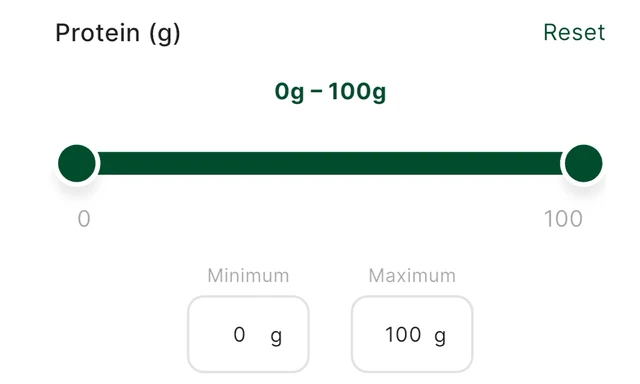
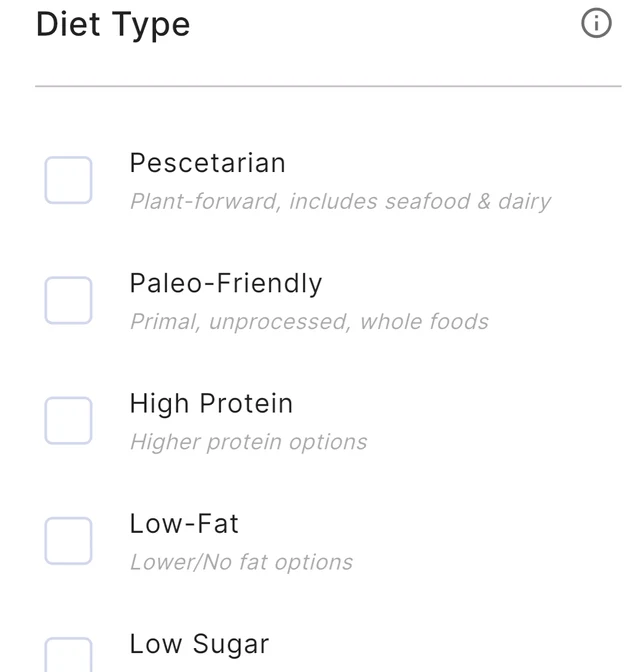
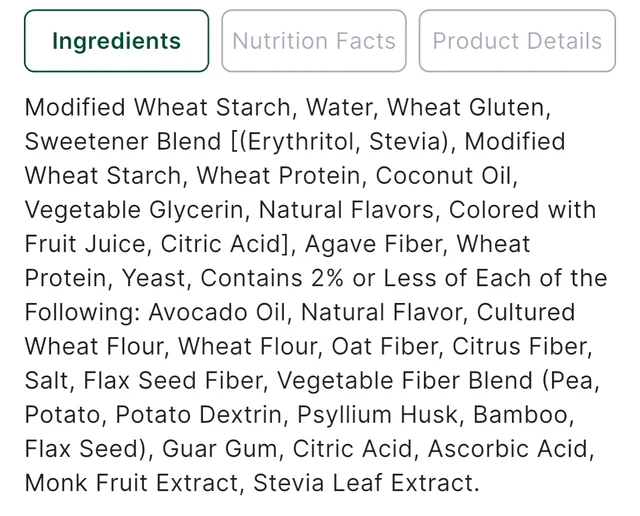
In the third screenshot, a sweetener blend of erythritol and stevia sits near the top of the ingredient list, which the Sugars line alone wouldn't tell you.
FAQ
Are protein bars healthy?
It depends on the bar and on what it replaces. The 15 we compared ranged from 4.8 g to 18.7 g of protein per 100 calories and from 0 g to 17 g of added sugars, so "protein bar" covers very different foods. Compare protein per 100 calories, the sweeteners and the protein source.
Which protein bars have no sugar alcohols?
Of the 15 we compared, RXBAR, Built Puff, SimplyProtein Crispy, Clif Builders, ALOHA, Perfect Bar and KIND Protein have no sugar alcohols in their ingredients (KIND Protein's label shows 0 g). Several contain vegetable glycerin, which some labels list in grams.
Why do protein bars give me gas?
Sugar alcohols and added fibers such as inulin (chicory root fiber) can cause gas or bloating in some people. In one trial, erythritol in a drink caused no significant symptoms at 20 or 35 g, and in another, up to 10 g a day of inulin was well tolerated, with gas and bloating the most common complaints. People's tolerance varies.
What does "net carbs" mean on a protein bar?
"Net carbs" has no FDA definition. Brands usually subtract fiber and sugar alcohols from Total Carbohydrate, each in their own way. Compare Total Carbohydrate on the Nutrition Facts panel instead.
How much protein should a protein bar have?
There's no official number for a bar. The bars we compared had 12 g to 28 g. What matters is your day's total: the National Academies' Recommended Dietary Allowance is 0.8 g per kg of body weight, and the 2025-2030 Dietary Guidelines for Americans set a goal of 1.2 to 1.6 g per kg.
Is it OK to eat a protein bar every day?
A protein bar can fit into a day's eating, but bars differ a lot in added sugars, sweeteners and calories. If you eat one daily, check those lines, and see how you feel with sugar alcohols and added fibers.
This article is general information, not medical advice. If you have a health condition, a food allergy or specific nutrition needs, talk to a doctor or registered dietitian.
Sources
Product labels: US labels from each brand's website, read on October 8, 2026, except RXBAR's, read on Kellanova's SmartLabel (last updated May 6, 2024; it matched Target's listing on October 8, 2026). Other sources read on October 8, 2026.
- Bars: David, Built Puff, Kirkland Signature US, Quest, Barebells US, Pure Protein US, No Cow, ONE, SimplyProtein US, think!, Clif Builders US, RXBAR SmartLabel (Kellanova), ALOHA, Perfect Bar, KIND Protein
- FDA, 21 CFR 101.9 (nutrition labeling: added sugars, sugar alcohols, protein %DV), 21 CFR 101.4 (ingredients in descending order by weight) and 21 CFR 101.54 (protein claims)
- FDA, Added Sugars on the Nutrition Facts Label, The Declaration of Allulose and Calories from Allulose (guidance, 2020), Questions and Answers on Dietary Fiber and Sugar Alcohols
- FDA, How Sweet It Is: All About Sweeteners and Aspartame and Other Sweeteners in Food
- National Academies, Dietary Reference Intakes for Energy, Carbohydrate, Fiber, Fat, Fatty Acids, Cholesterol, Protein, and Amino Acids (2005)
- USDA and HHS, Dietary Guidelines for Americans, 2025-2030 (January 2026), listed as current by ODPHP
- Paul and colleagues, Significant Amounts of Functional Collagen Peptides Can Be Incorporated in the Diet While Maintaining Indispensable Amino Acid Balance, Nutrients (2019). One author consults for a maker of collagen supplements and another works for a collagen producer.
- Storey and colleagues, Gastrointestinal tolerance of erythritol and xylitol ingested in a liquid, European Journal of Clinical Nutrition (2007). Its PubMed record doesn't name a funder.
- Ruskoné-Fourmestraux and colleagues, A digestive tolerance study of maltitol, European Journal of Clinical Nutrition (2003), whose PubMed record doesn't name a funder; Respondek and colleagues, Digestive tolerance of dairy desserts containing maltitol and fructo-oligosaccharides (2014), a trial run by an ingredient maker
- Bonnema and colleagues, Gastrointestinal tolerance of chicory inulin products, Journal of the American Dietetic Association (2010). Its PubMed record doesn't name a funder.