Healthy Grocery List for Beginners: What to Buy in Each Aisle
By Guiltless ·
A healthy grocery list for beginners covers the six food groups in the 2025-2030 Dietary Guidelines for Americans: vegetables, fruit, protein foods, dairy, whole grains and healthy fats such as olive oil. Fresh, frozen and canned vegetables and fruit all count toward your daily servings, if they have no or very little added sugar. The Guidelines also say to choose water or other unsweetened drinks, and to avoid highly processed salty or sweet foods such as chips, cookies and candy.
Guiltless, the grocery app we make, lets you scan barcodes or search for products to check their ingredients and Nutrition Facts while you build the list. Not every product is in the app.
How much to buy for one week
The Dietary Guidelines' servings guide gives daily servings for each food group at different calorie levels. The table below uses its 2,000-calorie column, which matches the 2,000 calories a day the FDA uses as a general guide on the Nutrition Facts label. The calories you need depend on your age, sex, height, weight and how active you are. For a week, multiply the daily servings by 7. If you shop for more than one person, add up each person's servings from the column for their calorie level: the guide has columns from 1,000 to 3,200 calories, and smaller portions may suit young children and some older adults.
| Food group | Servings a day (2,000 calories) | Servings a week | One serving is |
|---|---|---|---|
| Vegetables | 3 | 21 | 1 cup raw or cooked, or 2 cups of leafy greens |
| Fruit | 2 | 14 | 1 cup raw, or ½ cup dried |
| Protein foods | 3 to 4 | 21 to 28 | 3 oz cooked meat, poultry or seafood; 1 egg; ½ cup beans, peas or lentils; 1 oz nuts or seeds; or 2 tbsp nut or seed butter |
| Dairy | 3 | 21 | 1 cup milk, ¾ cup yogurt or 1 oz cheese |
| Whole grains | 2 to 4 | 14 to 28 | ½ cup cooked oats, brown rice, barley, quinoa or buckwheat; or 1 slice of bread or 1 tortilla made with whole grains |
| Healthy fats | 4½ | 31½ | 1 tsp olive oil or butter |
Daily servings from the Dietary Guidelines for Americans 2025-2030 "Daily Servings by Calorie Level" guide. The weekly column is the daily figure multiplied by 7.
Three vegetable servings a day can be a cup of cooked frozen broccoli at dinner, 2 cups of salad greens at lunch and a cup of raw carrots or peppers as a snack. For a week, that is 7 cups of broccoli, 14 cups of greens and 7 cups of carrots or peppers.
Protein is the only food group for which the Guidelines also give an amount by body weight: 1.2 to 1.6 g of protein per kilogram a day. For someone who weighs 70 kg (about 154 lb), that comes to 84 to 112 g a day.
A healthy grocery list, aisle by aisle
Stores are laid out differently, but most have these sections.
Produce
- Vegetables: leafy greens, carrots, bell peppers, onions, broccoli, tomatoes, potatoes or sweet potatoes
- Fruit: apples, bananas, oranges, berries and whatever else is in season
The Guidelines say to eat whole vegetables and fruits "in their original form," and most of the produce section has no label to read. According to the National Institute on Aging, bananas, apples, oranges, lettuce, green peppers and carrots may be reasonably priced.
Frozen
- Plain frozen vegetables: broccoli, spinach, peas, green beans, mixed vegetables
- Frozen fruit, such as berries, with no added sugar
- Frozen fish fillets
Pick frozen vegetables with no sauce or seasoning. The FDA suggests them, along with fresh and low-sodium canned vegetables, as a way to get less sodium.
Two university studies compared the vitamins in frozen and fresh forms of eight fruits and vegetables. A 2015 study from UC Davis found the vitamin content of the frozen produce was comparable to fresh and sometimes higher, although frozen peas, carrots and spinach had less beta-carotene than fresh. A 2017 study from the University of Georgia found no significant difference in most comparisons. Where there was a difference, it favored frozen produce more often than it favored fresh produce that had been stored in the refrigerator.
Canned and dry goods
- Canned or dry beans, lentils and chickpeas
- Canned tomatoes and canned vegetables
- Canned tuna or salmon
- Canned fruit packed in water or fruit juice
- Peanut butter or another nut butter, and nuts or seeds
On canned vegetables and beans, look for "low sodium" or "no salt added." Each sodium word on a label has a legal definition under FDA rules.

"Reduced sodium" is easy to misread. It means at least 25% less than the regular version of the same food, so a reduced-sodium soup can still be high in sodium. Check the milligrams on the Nutrition Facts label.
Draining canned beans also lowers their sodium. In a 2011 study of 25 canned bean products (five brands of each of five kinds), draining cut sodium by 36%. Draining and then rinsing cut it by 41%, from 503 mg to 295 mg per half-cup serving, although the difference between draining alone and draining plus rinsing was not statistically significant. The FDA also suggests rinsing canned beans, tuna and vegetables, and says rinsing removes some of the sodium.
For canned fruits that have an FDA standard, such as peaches, pears, pineapple and fruit cocktail, FDA rules require the label to name what the fruit is packed in, such as water, fruit juice or a syrup. For those four fruits, a light syrup is a sugar solution of 14% to just under 18%, and a heavy syrup is 18% to just under 22%. The ranges are a little higher for some other fruits, such as apricots and cherries. The Guidelines count canned fruit with no or very little added sugar toward your daily servings.
Meat, seafood and eggs
- Eggs
- Chicken or turkey
- Fish and other seafood, fresh or frozen
- Beef, pork or other red meat, if you eat it
- Tofu, if you prefer a plant protein
The Guidelines list both animal protein foods (eggs, poultry, seafood and red meat) and plant protein foods (beans, peas, lentils, nuts, seeds and soy).
On deli meat, sausages and other processed meat, read the ingredient list. The Guidelines say to choose meat with no or limited added sugars, refined carbohydrates or starches, or chemical additives.
Dairy
- Milk
- Plain yogurt or plain Greek yogurt
- Cheese
- Lactose-free milk or a fortified dairy alternative
The Guidelines say to include full-fat dairy with no added sugars. Their servings guide counts whole, reduced-fat, low-fat and nonfat dairy.
Check the Added Sugars line on the Nutrition Facts label. It reads "Includes X g Added Sugars," where X is the number of grams, and those grams are part of the Total Sugars above it. The sugar that occurs naturally in plain milk is not counted as added sugar, so plain yogurt can list several grams of sugars and 0 g of added sugars.
Bread, grains and cereal
- Whole wheat bread
- Whole wheat pasta
- Brown rice, quinoa or barley that isn't pearled
- Rolled or quick oats
- Breakfast cereal with a whole grain listed first
Check that a whole grain is the first ingredient. Ingredients are listed by weight, from most to least. FDA draft guidance says "wheat flour" is not a whole-grain flour, because the bran and germ have been removed. "Multigrain" can mean several refined grains, according to the Whole Grains Council, a nonprofit that promotes whole grains. Look for words like "whole wheat" or "whole grain oats" at the start of the ingredient list.
White bread, packaged breakfast options, flour tortillas and crackers are among the highly processed refined carbohydrates the Guidelines say to significantly reduce.
Oils
- Olive oil
- Another cooking oil you like, if you want a different flavor
The Guidelines say to prioritize oils with essential fatty acids, such as olive oil. They name butter and beef tallow as other options. They also say saturated fat should generally stay at or below 10% of daily calories. For more on one common oil, see Is Sunflower Oil Bad for You?
Drinks
- Water, still or sparkling
- Unsweetened tea or coffee
- Milk, which is already on the dairy list
The Guidelines say to avoid sugar-sweetened drinks such as sodas, fruit drinks and energy drinks, and to limit 100% fruit or vegetable juice to small portions or dilute it with water.
Snacks
If snacks are on your list, note that nuts, fruit, plain yogurt and whole-grain crackers all come from the groups above. For packaged snacks, see how to compare two snack bars by their labels. If you shop for children, see our comparison of healthy snacks for kids.

Three things to read on a package
Most packaged foods on the list have the same three places to look.
- Read the first few ingredients. Ingredients are listed by weight, from most to least, so the first few are the ones the food has the most of. Ingredients that make up 2% or less of the food by weight can be grouped at the end.
- In the %Daily Value column, 5% or less of a nutrient per serving is low, and 20% or more is high. That is the FDA's general guide. Look for lower numbers for saturated fat, sodium and added sugars, and higher ones for fiber, vitamin D, calcium, iron and potassium. Sodium's Daily Value is 2,300 mg, so 5% is 115 mg and 20% is 460 mg. Compare two foods at the same serving size, and remember that the serving size is not a recommendation of how much to eat.
- Check the Added Sugars line: the 2025-2030 Dietary Guidelines say one meal should contain no more than 10 g of added sugars. They also say no amount of added sugars is recommended. On the ingredient list, added sugars appear as words with "sugar" or "syrup" and words ending in "-ose," as well as honey, molasses and fruit juice concentrate.
On the front of the package, "no sugar added" means that no sugar, and no ingredient that contains sugar (such as jam or concentrated fruit juice), was added during processing. It does not mean the food has no sugar.
Make the list before you shop
A Veterans Affairs nutrition handout suggests checking what you already have, writing the list before you go, grouping it by store section, such as produce or frozen foods, buying only what is on it and not shopping hungry.
Keep the list on your phone
A list on your phone is with you in the store and is easy to share with anyone else who shops for the household. A notes app works, and so do grocery list apps.
Shopping on a budget
The National Institute on Aging suggests planning some meals around items on sale, buying extra canned goods when they are on sale, and trying store brands, which it says are often the same as the more expensive brand-name products.
The unit price on a shelf tag shows the price per ounce, pound or other unit for every brand and size, which makes a big box and a small box easy to compare. Many stores show it voluntarily, and 16 states have unit pricing rules, according to the National Institute of Standards and Technology, so you won't see it everywhere.
When you get home
As soon as you get home, put away meat, poultry, seafood, eggs and other food that needs to be refrigerated. The FDA says not to leave them at room temperature for more than 2 hours, or more than 1 hour if the air temperature is above 90°F. The FDA also says to keep the refrigerator at 40°F or below and the freezer at 0°F. The USDA and FDA describe a "Best if Used By" date as the date after which quality may decline, although the food may still be eaten.
Build your list with Guiltless
Guiltless is a food scanner app for grocery shopping, so you can check products as you add them to your list. In Guiltless, you can:
- scan a product's barcode, or search for it, to see its ingredients, Nutrition Facts and its GCR Score (Guiltless Certified Rating), a 0 to 100 rating designed to help you compare grocery products. It considers several factors, including nutritional quality, ingredients and additives, degree of processing and organic status where applicable. Not every product is in the app.
- filter products by diet type, such as Low Sugar or High Fiber, and by allergy, when supported. A diet type filter and an allergy filter work together in search, when supported. For allergies, read the label as well, and see grocery apps that filter by allergen for what the allergy filters cover.
- add products to your cart, then save or share the list through your phone's share menu, for example to Notes, Messages or Mail. From the cart, order on-demand, where available.
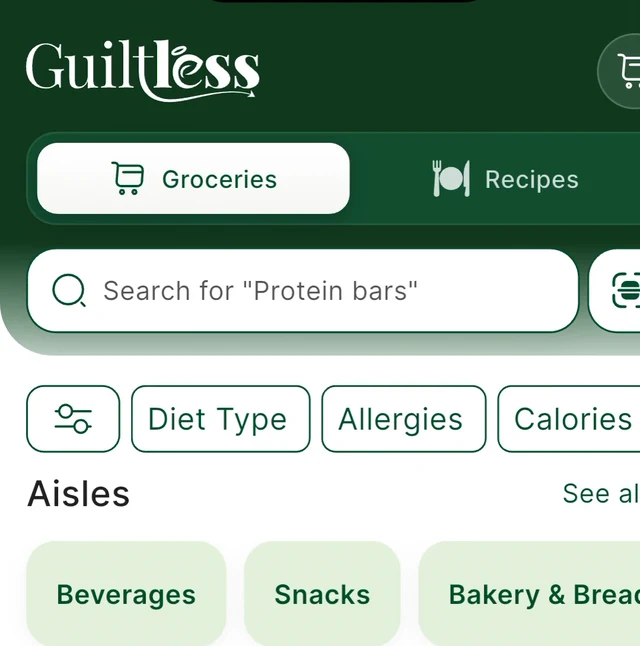
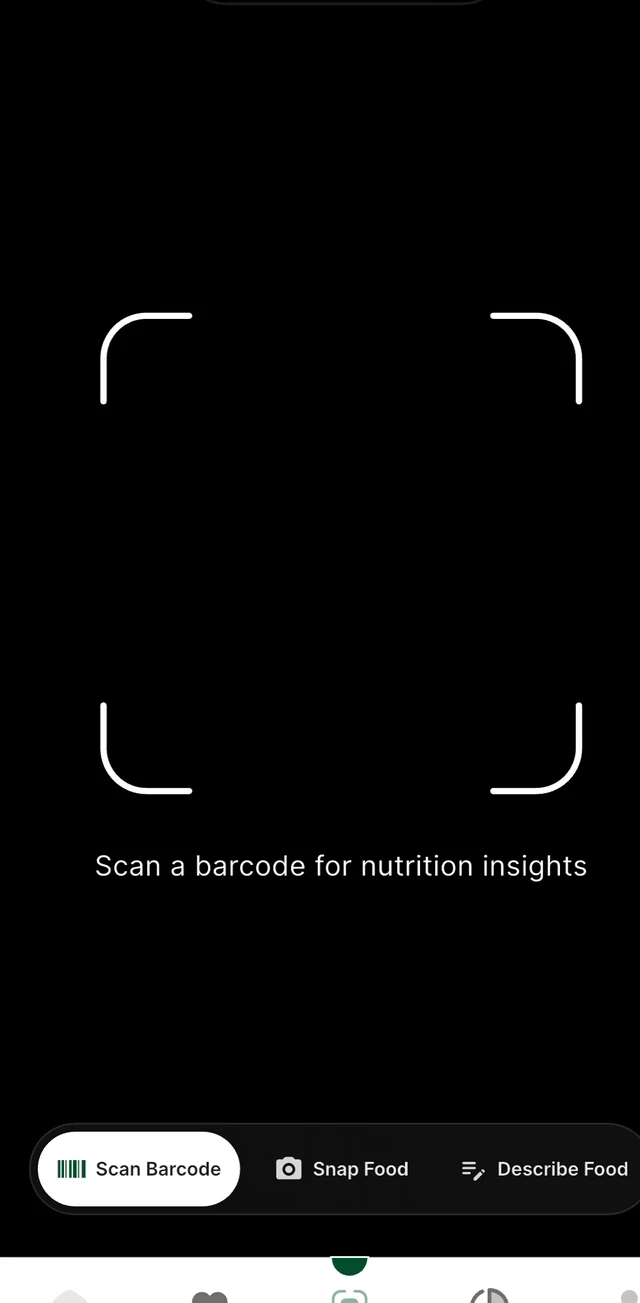
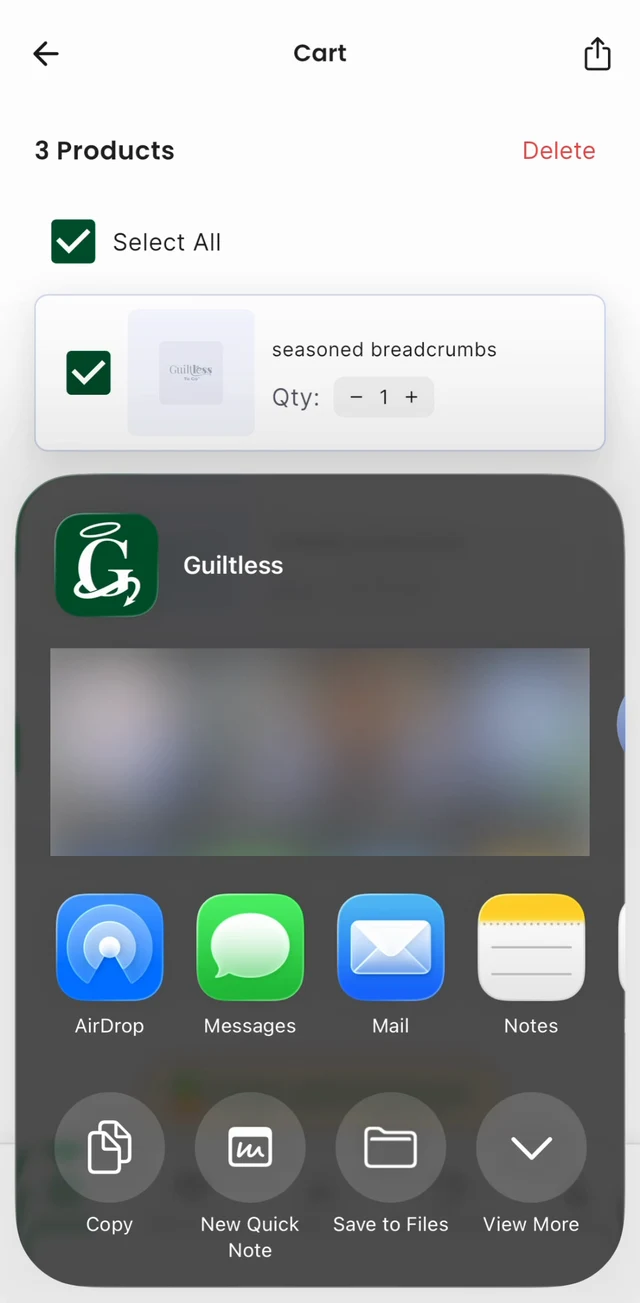
Build this week's list in the app, and check each product's label as you add it.
FAQ
What should be on a healthy grocery list?
Foods from the six groups in the 2025-2030 Dietary Guidelines: vegetables; fruit; protein foods such as eggs, fish, poultry, meat, beans and nuts; dairy such as milk, plain yogurt and cheese; whole grains such as oats, brown rice and whole wheat bread; and a healthy fat such as olive oil. Add water or other unsweetened drinks.
How much food should I buy for a week?
For one person eating about 2,000 calories a day, the Dietary Guidelines' daily servings, multiplied by 7, come to about 21 servings of vegetables, 14 of fruit, 21 to 28 of protein foods, 21 of dairy and 14 to 28 of whole grains a week. A vegetable serving is 1 cup raw or cooked, or 2 cups of leafy greens.
Are frozen vegetables as healthy as fresh?
They can be. The Dietary Guidelines count frozen vegetables and fruit with no or very little added sugar toward your daily servings, and two university studies found the vitamins in frozen produce were generally similar to fresh, with some differences in both directions. Choose frozen vegetables without sauce or seasoning.
Can canned food be part of a healthy grocery list?
Yes. The Dietary Guidelines count canned vegetables and fruit with no or very little added sugar toward your daily servings. Look for "low sodium" or "no salt added" on canned vegetables and beans, drain and rinse canned beans, and choose fruit packed in water or fruit juice rather than syrup.
What does "healthy" on a food package mean?
The FDA updated the "healthy" claim in December 2024. To use it, a food must contain a set amount from at least one food group (such as fruit, vegetables, grains, fat-free or low-fat dairy, or protein foods) and stay under limits for added sugars, saturated fat and sodium. Plain fruits, vegetables and fish qualify whether fresh, frozen or canned. The claim is voluntary, and companies have until February 25, 2028, to follow the new rule.
How do I make a healthy grocery list on a budget?
Plan some meals around items on sale, buy extra canned goods when they are on sale, try store brands and compare unit prices on the shelf tags. Frozen and canned vegetables and fruit with no or very little added sugar count toward the Guidelines' servings as much as fresh.
This article is general information, not medical advice. If you have a health condition, a food allergy or specific nutrition needs, talk to your doctor or a registered dietitian.
Sources
Sources read on October 13, 2026.
- USDA and HHS, Dietary Guidelines for Americans, 2025-2030 (released January 7, 2026) and its Daily Servings by Calorie Level guide, from realfood.gov.
- FDA, 21 CFR 101.61 (sodium claims), 21 CFR 101.56 ("light in sodium"), 21 CFR 101.60 (sugar claims) and 21 CFR 101.4 (ingredients listed by weight). The FDA's Sodium in Your Diet page states the sodium terms "per serving"; the regulation measures them per reference amount customarily consumed.
- FDA, How to Understand and Use the Nutrition Facts Label and Daily Value on the Nutrition and Supplement Facts Labels.
- FDA, Use of the "Healthy" Claim on Food Labeling, the final rule (December 27, 2024) and the notice delaying its effective date to April 28, 2025, which kept the compliance date of February 25, 2028.
- FDA, Draft Guidance: Whole Grain Label Statements (2006, draft, nonbinding), and the Whole Grains Council, Identifying Whole Grain Products, for "multigrain".
- FDA, 21 CFR 145.3 and the canned fruit standards for fruit cocktail (145.135), peaches (145.170), pears (145.175) and pineapple (145.180) (packing media and syrup names). Other standards, such as 145.115 (apricots) and 145.125 (cherries), set higher syrup ranges.
- Duyff, Mount and Jones, "Sodium Reduction in Canned Beans After Draining, Rinsing", Journal of Culinary Science & Technology (2011), 5 brands each of 5 bean varieties, 3 cans per brand. The paper has no funding statement; it cites a consumer survey on file at Bush Brothers & Company, and the copy of the paper that was read is hosted on the Bush's Beans website.
- Bouzari, Holstege and Barrett, Vitamin retention in eight fruits and vegetables, Journal of Agricultural and Food Chemistry (2015), and Li and colleagues, Selected nutrient analyses of fresh, fresh-stored, and frozen fruits and vegetables, Journal of Food Composition and Analysis (2017). The Frozen Food Foundation, a frozen-food industry foundation, says it partnered on both studies.
- National Institute on Aging, Overcoming Roadblocks to Healthy Eating.
- US Department of Veterans Affairs, Heart Healthy Grocery Shopping (2020), for its list-making tips only.
- National Institute of Standards and Technology, Unit Pricing Guide (NIST SP 1181, 2025).
- FDA, Refrigerator Thermometers: Cold Facts about Food Safety, and USDA FSIS and FDA, Food Date Labeling request for information (December 4, 2024).