What Do Natural Flavors Mean on a Label?
By Guiltless ·
Under FDA rules, "natural flavor" means a flavoring made from a plant or animal source, such as fruit, spices, herbs, meat, seafood, eggs or dairy, whose significant function in the food is flavoring rather than nutrition. Under those rules, the label doesn't have to say which source was used or what went into the flavor. It does have to name the nine major food allergens even when they are in a natural flavor, and it can't list added MSG or a protein hydrolysate as "natural flavor."
FDA labeling rules cover most packaged foods in the US, and they are the rules this post describes unless it says otherwise. Poultry, most meat and some egg products follow USDA rules instead, and those rules differ in some ways. The USDA rules for meat and poultry are covered below.
Guiltless, the grocery app we make, shows a product's ingredient list and has allergy filters for products, when supported. Not every product is in the app.
What counts as a natural flavor?
Under FDA rules, a natural flavor is an essential oil, oleoresin, essence, extract, protein hydrolysate, distillate, or any product of roasting, heating or enzymolysis (breaking down with enzymes) whose flavor comes from one of these sources:
- spices, herbs, bark, buds, roots, leaves or similar plant material
- fruit or fruit juice, vegetables or vegetable juice
- edible yeast
- meat, seafood, poultry, eggs or dairy products
- fermentation products of any of these
The FDA's definition adds that the flavor's "significant function in food is flavoring rather than nutritional." A natural flavor is there for taste.
The definition is about where the flavor comes from. It allows processing such as heating, roasting, enzymes and distilling, and it doesn't limit how many steps a flavor can go through. The FDA has not set a formal definition of the word "natural" by itself. Its long-standing policy is that "natural" means nothing artificial or synthetic was added that wouldn't normally be expected in the food. The FDA says that policy did not explicitly address processing methods and did not consider whether "natural" should describe any nutritional or other health benefit.
Natural flavors vs. artificial flavors
The difference between a natural and an artificial flavor is the source. Under the FDA's definition, an artificial flavor is any substance used to add flavor that is not derived from the food sources listed above.
The FDA keeps separate lists of natural flavoring substances and synthetic flavoring substances that may be used in food, and substances on both lists must be used in the smallest amount needed to do their job. Spices, essential oils and many extracts are on the FDA's list of substances generally recognized as safe (GRAS). Many other flavor substances have been judged GRAS by an expert panel run by the Flavor and Extract Manufacturers Association (FEMA), the flavor industry's trade group. Telling the FDA about a GRAS decision is voluntary. In August 2026 the FDA proposed a rule that would make GRAS notices required for certain uses; it is a proposal, not a final rule.
Neither "natural" nor "artificial" tells you how healthy the food is. For that, look at the whole label: the Nutrition Facts panel and the rest of the ingredient list.
What "natural flavor" doesn't have to tell you
Federal law lets companies list flavorings as a group without naming each ingredient, and the FDA's labeling rule says natural flavor may be declared simply as "natural flavor." So the ingredient list doesn't have to tell you:
- Whether a natural flavor came from a plant or an animal. Unless the source is a major food allergen, such as milk or egg, the label doesn't have to name it.
- The individual ingredients in the flavor. The flavor's recipe can stay private.
- Allergens outside the nine major allergens. Food Allergy Research & Education (FARE), a US allergy group, says an allergen such as mustard can be part of a spice or flavoring and not appear by name.
- Barley or rye. They contain gluten but are not major food allergens, so a flavor made from barley doesn't have to say "barley." The FDA also notes that a name such as "malt extract" doesn't say that the source is barley (more on gluten below).
- Some small amounts of other substances that come along with a flavor. Under FDA rules, a substance carried into a food by a flavor doesn't have to be listed if it is present at insignificant levels and does nothing in the finished food. A major food allergen is never exempt this way.
What a natural flavor can't hide
Under FDA rules, major food allergens must be declared even when they are inside a natural flavor. The FD&C Act says a flavoring, coloring or incidental additive that is or contains a major food allergen must follow the allergen labeling rules. The nine major food allergens are milk, eggs, fish, crustacean shellfish, tree nuts, peanuts, wheat, soybeans and sesame. Sesame was added on January 1, 2023.
An allergen can be declared in one of two ways: in the ingredient list, with the source in parentheses after the ingredient's name, or in a "Contains" statement right after or next to the ingredient list. The FDA gives this example: if a product lists whey, egg yolks and a natural flavor that contains peanut protein, its "Contains" statement must name milk, egg and peanuts.
Added MSG must be listed as "monosodium glutamate," not as "natural flavor." The FDA says MSG also cannot be listed as "spices and flavoring."
A protein hydrolysate used for flavor must be named, with its source. A hydrolysate is a protein broken down into smaller pieces. FDA rules say it can't be listed as "flavor," "natural flavor" or "flavoring." It must have a specific name, such as "hydrolyzed wheat gluten," "hydrolyzed soy protein" or "autolyzed yeast extract." "Hydrolyzed vegetable protein" and "hydrolyzed protein" are not acceptable names, because they don't say where the protein came from.
Protein hydrolysates and yeast extracts contain glutamate naturally, as do tomatoes and cheese. The FDA requires these ingredients to be listed but doesn't require the label to say they contain glutamate. A food made with a protein hydrolysate or a yeast extract can't claim "No MSG" or "No added MSG."
Under FDA rules, onion powder, garlic powder and celery powder must be named. The FDA's rule says they are commonly understood to be food rather than flavor, so they are listed by their own names.
Natural flavors and gluten
A natural flavor can contain barley without saying so. Wheat is a major food allergen, so under FDA rules wheat must be declared, even in a flavor. Barley and rye are not major allergens, so they don't have to be named. A food labeled gluten-free is held to a separate rule, below.
Under the FDA's gluten-free rule, a food labeled "gluten-free" can't contain an ingredient that is a gluten-containing grain (wheat, rye or barley) or one that was made from such a grain and wasn't processed to remove gluten, and it must have less than 20 parts per million of gluten. The rule covers the food's ingredients and makes no exception for flavors. The FDA says barley malt, malt extract and similar malt-derived ingredients can't be used in a food labeled gluten-free.
In January 2026, the FDA published a request for information on gluten labeling that cites a citizen petition asking it to require ingredients with gluten to be listed by name. The request asks for data on situations where a label doesn't have to name the source of an allergen that isn't one of the nine, and its examples include spice, color, flavoring and malt extract (the name "malt extract" doesn't say that the source is barley). The comment period closed on April 22, 2026, and the request does not change any labeling rule.
If you avoid gluten, look for a gluten-free claim, or ask the manufacturer what grain, if any, a natural flavor contains. Our posts on sourdough bread and soy sauce explain how the gluten-free rule works for fermented foods.
Are natural flavors vegan?
You can't tell from the label. A natural flavor can come from meat, seafood, poultry, eggs or dairy, and the label doesn't have to say so unless the source is a major allergen. Milk, eggs, fish and crustacean shellfish would have to be declared. For a flavor made from beef, chicken or pork, for example, the source would not have to be named. The Vegetarian Resource Group suggests contacting the manufacturer to ask.
A common question is castoreum, an extract from beaver glands. Castoreum is on the FDA's list of substances generally recognized as safe. In a 2011 Vegetarian Resource Group survey, five vanilla and flavor makers said they don't use castoreum in vanilla flavorings sold for food. That survey covered only five companies and only vanilla, so it doesn't show whether castoreum is used in other flavors.
Flavor words on the front of the package
When a package names or pictures a flavor, such as strawberries on a box of shortcake, FDA rules set the words it must use.
| On the front of the package | What it means under FDA rules |
|---|---|
| The flavor's name alone, such as "vanilla" | The food has no artificial flavor that imitates or reinforces the vanilla flavor, and none of the cases below applies. |
| "Strawberry flavored" or "natural strawberry flavored" | The food gets its strawberry flavor from natural flavor made from strawberries, and it has too little strawberry, or none, to carry the flavor on its own. |
| "With other natural flavor" after the name | The food has flavor from the named food plus other natural flavors that imitate or reinforce it. |
| "Artificial" or "artificially flavored," such as "artificially flavored strawberry" | The food has an artificial flavor that imitates or reinforces the named flavor. |
From the FDA's flavor labeling rule, 21 CFR 101.22(i).
The FDA rule also says that if none of the natural flavor comes from the food whose flavor is imitated, the package must name the flavor's real source or say "artificially flavored." So a box can't say "natural strawberry flavored" when none of the flavor came from strawberries. The ingredient list can still just say "natural flavor."
Meat, poultry and organic foods
On meat and poultry products, a flavoring that comes from livestock or poultry has to name the species, such as "dried chicken stock" or "lamb extract." USDA rules differ from the FDA's in a few other ways. On these labels, "natural flavor" or "flavoring" can also cover spices and onion, garlic or celery powder. Hydrolyzed proteins, autolyzed yeast and MSG must be listed by name. The USDA's Food Safety and Inspection Service (FSIS) says the federal "Contains" statement rules apply only to FDA-regulated foods, but it requires every ingredient, including those that are or contain major allergens, to be listed by its common name. It encourages "Contains" statements on a voluntary basis.
In foods labeled USDA organic, nonorganic flavors may be used only when organic flavors are not commercially available. All flavors in those foods must come from organic or nonsynthetic sources and can't be made with synthetic solvents, synthetic carrier systems or artificial preservatives. Our post on what organic means on a food label explains the organic labels.
A real label with natural flavors
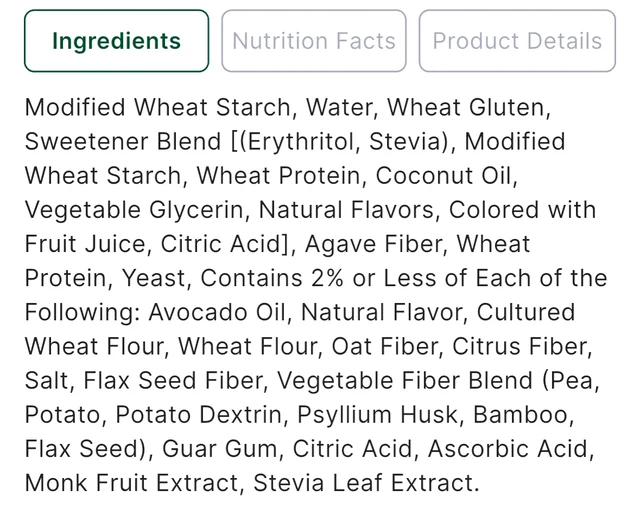
In this bagel's ingredient list, natural flavor appears in two places, as "Natural Flavors" and as "Natural Flavor":
- Inside the sweetener blend, in brackets. FDA rules let an ingredient that contains several ingredients, and has an established common or usual name, be listed by that name followed by its own ingredients in parentheses. On this label, the brackets show that "Natural Flavors" is one of the sweetener blend's own ingredients.
- After "Contains 2% or Less of Each of the Following." Ingredients are listed from most to least by weight, but FDA rules let ingredients that make up 2% or less of the food be listed after a statement like this one. So this natural flavor is a small part of the bagel.
This label lists wheat several times by name, and it doesn't say what either natural flavor is made from. If you needed to know, for example to avoid an animal source or barley, you would have to ask the manufacturer.
How to read "natural flavor" on a label
- Check the "Contains" statement and the ingredient list for the nine major allergens. Under FDA rules, if one is in a natural flavor, it must be declared in one of those places.
- If you avoid an allergen outside the nine, such as mustard, ask the manufacturer. The label doesn't have to name it when it is part of a flavor.
- If you avoid gluten, look for a gluten-free claim or ask what grain a flavor contains. Inside a flavor, barley doesn't have to be named, and a name such as "malt extract" doesn't say that the source is barley.
- If you avoid MSG, look for "monosodium glutamate" and for hydrolyzed proteins and yeast extracts. Added MSG and protein hydrolysates must be named.
- If you avoid animal products, ask the manufacturer. The label doesn't have to say whether a natural flavor came from an animal, unless the source is a major allergen.
- Read the label every time you buy. The FDA notes that a product's ingredients can change at any time, and suggests checking with the manufacturer or distributor named on the label if you're unsure what a food contains.

Filter and scan with Guiltless
Guiltless is a food scanner app for grocery shopping, so that you can check products before they go in your cart. In Guiltless, you can:
- open a product to read its full ingredient list, as in the bagel example above.
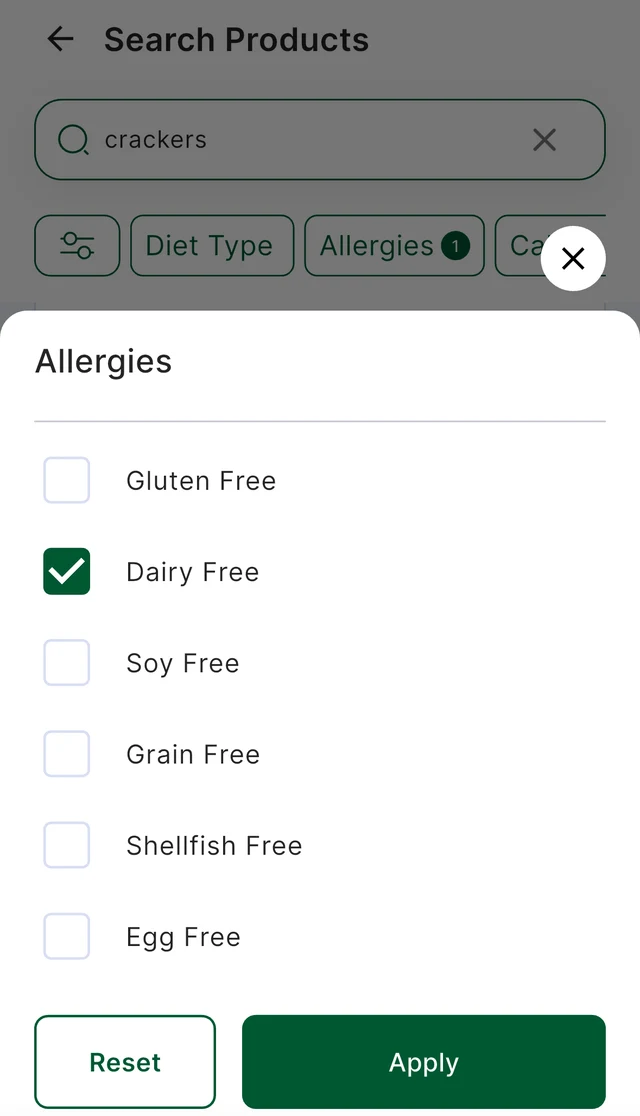
- filter products with the allergy filters, when supported: Gluten Free, Dairy Free, Soy Free, Grain Free, Shellfish Free, Egg Free, Nut Free and Peanut Free. A diet type filter and an allergy filter work together in search, when supported. Filter results depend on the app's product data, so read the package for the ingredient list and the "Contains" statement.
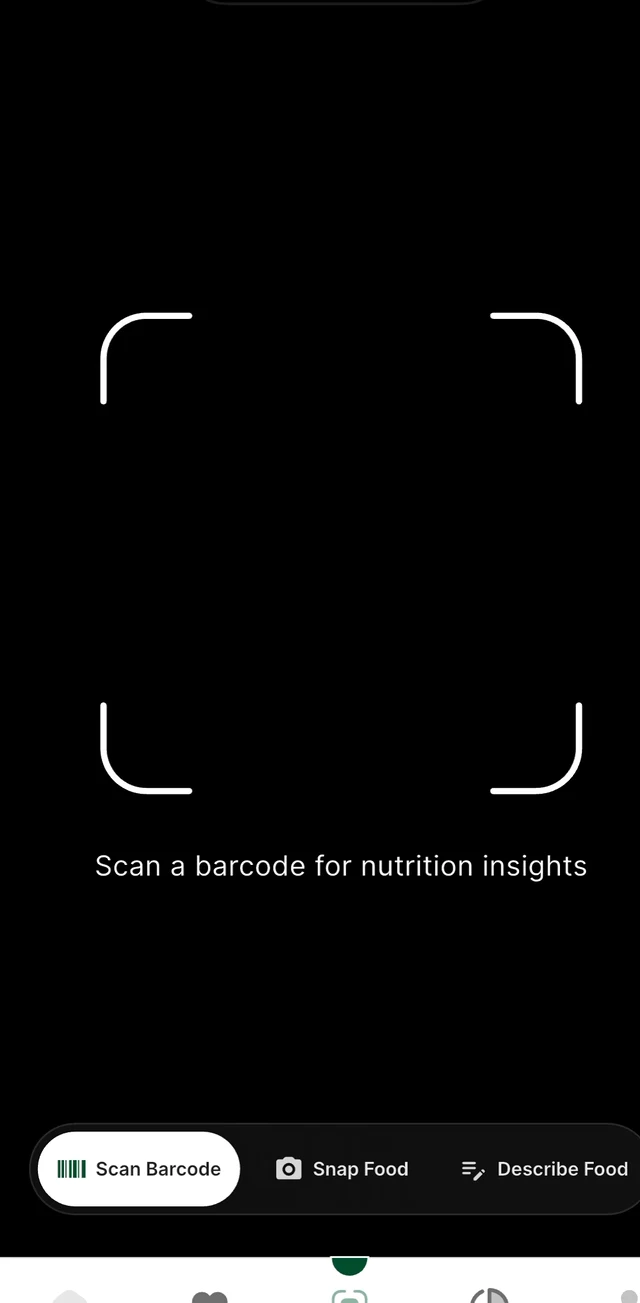
- scan a product's barcode, or search for it, to see its GCR Score (Guiltless Certified Rating), a 0 to 100 rating designed to help you compare grocery products. It considers several factors, including nutritional quality, ingredients and additives, degree of processing and organic status where applicable. Not every product is in the app.
- add products to your cart, then save or share the list through your phone's share menu. From the cart, order on-demand, where available.
A label that says only "natural flavor" doesn't list what is in it. For allergens outside the nine, gluten from barley or an animal source, check the rest of the label and ask the manufacturer.
For how major allergens appear on a label, and why a gluten-free filter is not a wheat-allergy filter, see our post on grocery apps that filter by allergen.
FAQ
What are natural flavors made of?
Under the FDA's definition, natural flavors are made from food sources: spices, herbs and other plant material, fruit or fruit juice, vegetables or vegetable juice, edible yeast, meat, seafood, poultry, eggs, dairy products, or fermentation products of these. They can be essential oils, extracts, distillates, protein hydrolysates or products of roasting, heating or enzymes. The label doesn't have to name the source or the ingredients, unless the source is a major food allergen.
Are natural flavors bad for you?
The label term doesn't answer that. "Natural flavor" tells you where a flavor came from, not whether the food is healthy. To judge a food, read the Nutrition Facts panel and the full ingredient list. If you have a food allergy or another condition, ask your doctor or a registered dietitian.
Is natural flavor better than artificial flavor?
The difference is the source. A natural flavor comes from a plant or animal food source, and an artificial flavor doesn't. Neither term tells you whether a food is healthier.
Can natural flavors contain MSG?
Added MSG can't be listed as "natural flavor." The FDA requires it to be listed as "monosodium glutamate." Protein hydrolysates and yeast extracts, which contain glutamate naturally, must be named too, and foods made with them can't claim "No MSG."
Can natural flavors contain allergens?
Yes, but under FDA rules the nine major food allergens must be declared even when they are inside a natural flavor: milk, eggs, fish, crustacean shellfish, tree nuts, peanuts, wheat, soybeans and sesame. Other allergens, such as mustard, don't have to be named when they are part of a flavor. If you avoid one of those, ask the manufacturer.
Do natural flavors contain gluten?
They can. Under FDA rules, wheat must be declared, but barley and rye don't have to be named inside a flavor, so a natural flavor could be made from barley without saying so. A food labeled gluten-free can't contain barley malt and must have less than 20 parts per million of gluten.
Are natural flavors vegan?
You can't tell from the label. Under FDA rules, a natural flavor can come from meat, seafood, poultry, eggs or dairy, and the label doesn't have to name the source unless it is a major allergen. On meat and poultry products, USDA rules require flavorings from livestock or poultry to name the species. If you avoid animal products, ask the manufacturer.
This article is general information, not medical advice. If you have a food allergy, celiac disease or specific nutrition needs, talk to your doctor or a registered dietitian.
Sources
Sources read on November 5, 2026. Federal regulations were read from the eCFR (Titles 7, 9 and 21, current to November 3, 2026).
- FDA flavor labeling rule, 21 CFR 101.22: the definitions of natural and artificial flavor in paragraph (a), declaring flavors in the ingredient list and incidental additives in (h)(1) and (h)(2), onion, garlic and celery powder in (h)(3), MSG in (h)(5), protein hydrolysates in (h)(7), and front-of-package flavor wording in (i).
- FDA rule on protein hydrolysate names, 21 CFR 102.22.
- FDA labeling exemptions, 21 CFR 101.100(a)(3), for incidental additives, and FDA ingredient-list rules, 21 CFR 101.4, paragraphs (a)(1), (a)(2) and (b)(2), for ingredient order, the "2% or less" statement and ingredients listed in parentheses.
- FD&C Act, 21 U.S.C. 343, section 403(i) on naming flavorings as a group and section 403(w) on allergen labeling, including 403(w)(4) on flavorings, and 21 U.S.C. 321(qq), the list of major food allergens and the FASTER Act's sesame amendment (U.S. Code, 2023 edition).
- FDA, Have Food Allergies? Read the Label, for the "Contains" statement example and the advice to check labels and ask the manufacturer; The FASTER Act: Sesame Is the Ninth Major Food Allergen; Food Allergies: What You Need to Know, for which foods FDA labeling rules cover; and Food Allergies.
- FDA, Guidance for Industry: Questions and Answers Regarding Food Allergens (Edition 5), January 2025, Q&A D.8, for incidental additives not being exempt from the allergen labeling requirements.
- FDA, Questions and Answers on Monosodium glutamate (MSG), for declaring MSG, ingredients that contain glutamate naturally, and "No MSG" claims.
- FDA gluten-free labeling rule, 21 CFR 101.91, and FDA, Questions and Answers on the Gluten-Free Food Labeling Final Rule, for barley malt and malt extract.
- FDA, Labeling and Preventing Cross-Contact of Gluten for Packaged Foods; Request for Information, 91 FR 2781 (January 22, 2026), and its comment period extension, 91 FR 13037 (March 18, 2026), to April 22, 2026. We found no proposed rule following it when these sources were read.
- FDA, Use of the Term Natural on Food Labeling.
- FDA rules on flavoring substances, 21 CFR 172.510 (natural) and 21 CFR 172.515 (synthetic), and the GRAS lists in 21 CFR part 182, subpart A, including castoreum in section 182.50. FDA, Generally Recognized as Safe (GRAS), and the proposed rule Substances Generally Recognized as Safe, 91 FR 51834 (August 11, 2026), comments due December 9, 2026.
- Flavor and Extract Manufacturers Association, About FEMA GRAS Program, an industry source, for its expert panel.
- USDA meat and poultry labeling rules, 9 CFR 317.2, 9 CFR 317.8 and 9 CFR 381.118; FSIS, Natural Flavorings on Meat and Poultry Labels (August 2013); and FSIS, Food Allergies: The "Big 9".
- USDA National Organic Program, 7 CFR 205.605(a), the flavors entry, and the final rule of December 27, 2018 (83 FR 66559) that requires organic flavors when commercially available, in force for flavors from December 27, 2019.
- Food Allergy Research & Education (FARE), How to Read a Food Label, for allergens such as mustard inside spices and flavorings.
- Vegetarian Resource Group, Guide to Food Ingredients, for its advice to contact manufacturers, and its blog post Beaver Gland Castoreum Not Used in Vanilla Flavorings According to Manufacturers (June 2011), a survey of five vanilla and flavor makers, who reported their own practices.
- The bagel ingredient list is a screenshot of the Guiltless app, from a screen recording made on September 30, 2026, and first used in our post on protein bars.